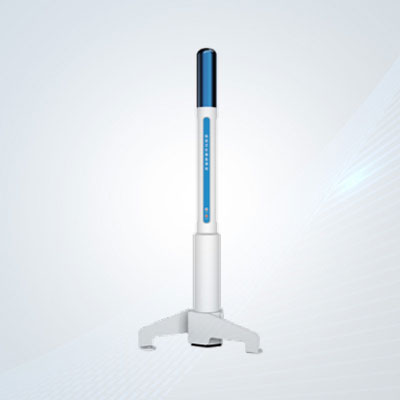
Turbidity refers to the cloudiness, haziness, or opacity of a liquid caused by suspended solid particles—including silt, clay, algae, organic debris, microorganisms, and fine chemical precipitates—that scatter or absorb light passing through the liquid. As a critical and widely used water quality parameter, turbidity directly reflects the cleanliness of water bodies and serves as a key indicator for environmental monitoring, drinking water safety, wastewater treatment, and industrial process control. A turbidity sensor is a precision optical instrument designed to quantitatively measure turbidity levels by detecting light transmission or scattering characteristics in a liquid sample, enabling real-time, accurate, and continuous monitoring of water clarity. With the global emphasis on water resource protection and intelligent water quality management, turbidity sensors have evolved from basic laboratory tools to compact, online, and high-precision devices widely deployed in field and industrial settings. This article provides a comprehensive overview of turbidity sensors, covering their core working principles, technical classifications, structural components, performance metrics, typical application scenarios, operational challenges, maintenance best practices, and future development trends.
1. Core Working Principles of Turbidity Sensors
All modern
turbidity sensors operate based on optical interactions between light and suspended particles, following standardized measurement protocols (most commonly ISO 7027, the international standard for water quality—turbidity measurement). Two fundamental principles dominate the industry, each suited for specific turbidity ranges and application scenarios:
1.1 Nephelometric Principle (90° Light Scattering)
The nephelometric method is the most widely adopted and internationally recognized principle, ideal for low to medium turbidity levels (0–4000 NTU, Nephelometric Turbidity Units), the range relevant to most drinking water, surface water, and clean process water monitoring. In this design, the sensor emits a stable light beam (typically near-infrared light at 850–950 nm, chosen for strong penetration, low color interference, and compliance with ISO 7027) into the water sample. Suspended particles scatter the incident light in all directions, and a dedicated detector positioned at a 90-degree angle to the light source measures the intensity of scattered light. The scattered light intensity is directly proportional to the concentration of suspended particles: higher turbidity leads to stronger scattered light and a higher measured turbidity value. This method minimizes interference from water color and offers high sensitivity for low-turbidity environments, making it the gold standard for drinking water and environmental water monitoring.
1.2 Turbidimetric (Transmission) Principle
The turbidimetric method measures the attenuation or reduction of light intensity as light passes through a liquid sample, suitable for high turbidity environments (above 1000 NTU) such as wastewater, industrial effluent, and muddy surface water. A light source emits a beam through the sample, and a detector placed directly opposite the light source (180 degrees) measures the remaining transmitted light. As turbidity increases, more light is scattered and absorbed by particles, reducing transmitted light intensity and indicating higher turbidity. While less sensitive for low turbidity levels, this principle delivers stable and reliable readings for highly turbid liquids, making it essential for wastewater treatment plants and heavy industrial applications.
1.3 Advanced Hybrid & Laser Scattering Designs
High-end turbidity sensors integrate both scattering and transmission principles to cover full turbidity ranges (0–10000+ NTU) with consistent accuracy. Laser-based turbidity sensors use monochromatic laser light (typically 660 nm) for ultra-high sensitivity, capable of detecting trace particles and measuring turbidity as low as ±0.01 NTU, ideal for ultra-pure water monitoring in pharmaceuticals, semiconductors, and laboratory research. Some advanced models also feature dual-angle detection or background light compensation to eliminate interference from ambient light, sensor fouling, and water color, further enhancing measurement stability.
2. Classification of Turbidity Sensors
Turbidity sensors are categorized by design principle, application scenario, and installation method, with each type tailored to specific operational needs:
- Laboratory Turbidity Sensors/Meters: Benchtop precision instruments for laboratory analysis, offering high accuracy (±0.01 NTU) and calibration capabilities. Used for sample testing, method validation, and field sensor calibration, requiring controlled laboratory conditions and professional operation.
- Online/In-Situ Turbidity Sensors: Immersible or flow-through probes designed for continuous, real-time monitoring in the field, water treatment plants, and industrial pipelines. Equipped with waterproof housings (IP68 rating), auto-cleaning functions, and digital signal output (4–20 mA, RS485, Modbus), these sensors connect to centralized monitoring platforms for long-term unattended operation.
- Portable Handheld Turbidity Sensors: Compact, battery-powered devices for on-site spot testing, field surveys, and emergency water quality monitoring. Lightweight and easy to operate, they provide instant readings and are widely used by environmental protection agencies, water utilities, and field technicians.
- Industrial In-Line Turbidity Sensors: Robust probes designed for harsh industrial environments, resistant to corrosion, high pressure, and temperature fluctuations. Used in wastewater treatment, food and beverage production, pharmaceutical manufacturing, and chemical processing to monitor process water quality and ensure compliance with discharge standards.
3. Core Structural Components
A complete turbidity sensor assembly consists of four key integrated components, each critical to measurement accuracy and durability:
- Light Source: Stable, long-life light-emitting diodes (LEDs, near-infrared) or laser diodes, providing consistent incident light to avoid signal drift. Infrared sources are preferred for minimal color interference and compliance with international standards.
- Optical Detector: High-sensitivity photodiodes that convert scattered or transmitted light into electrical signals. For nephelometric sensors, detectors are precisely positioned at 90°; for turbidimetric sensors, they align directly with the light source.
- Signal Processing Module: Converts weak electrical signals from the detector into calibrated turbidity values (NTU, FNU, or FAU), filters out noise and interference, and outputs standardized digital or analog signals for data transmission and display.
- Probe Housing & Optical Window: Made of corrosion-resistant materials (stainless steel, POM, or tempered glass) to withstand harsh water environments. The optical window ensures unobstructed light transmission, while advanced models include automatic wipers or air-blast cleaning systems to prevent fouling from biofilm, sediment, or debris.
4. Key Performance Metrics
Selecting the right turbidity sensor requires evaluating core performance parameters to match application requirements:
- Measurement Range: Typical ranges include 0–4000 NTU (general water monitoring), 0–10000 NTU (wastewater), and 0–100 NTU (drinking water/ultra-pure water).
- Accuracy & Resolution: High-precision sensors offer ±1%–±3% full-scale accuracy and resolution as low as 0.01 NTU; basic industrial models have slightly lower accuracy for cost efficiency.
- Response Time: Online sensors feature fast response times (1–30 seconds) for real-time monitoring, critical for early warning of sudden turbidity spikes.
- Environmental Resistance: Waterproof rating (IP68 for in-situ use), operating temperature range (0–60°C for most applications), and resistance to corrosion and vibration.
- Calibration Stability: Long calibration intervals (3–6 months) with minimal drift, reducing maintenance frequency and operational costs.
5. Typical Application Scenarios
Turbidity sensors are indispensable across water-related industries, supporting safety compliance, process optimization, and environmental protection:
5.1 Drinking Water Treatment
Turbidity is a mandatory safety indicator for drinking water, with strict standards (typically ≤1 NTU for finished tap water). Turbidity sensors monitor water clarity at every treatment stage—raw water intake, coagulation, sedimentation, filtration, and disinfection—to ensure effective removal of suspended particles and pathogens. Real-time monitoring prevents contaminated water from entering the distribution network, safeguarding public health.
5.2 Wastewater Treatment
Wastewater treatment plants use turbidity sensors to monitor influent turbidity, evaluate treatment efficiency, and verify effluent compliance before discharge. High effluent turbidity indicates incomplete treatment, triggering alerts to adjust process parameters (e.g., coagulant dosage, filtration speed) and prevent environmental pollution.
5.3 Surface Water & Environmental Monitoring
Environmental agencies deploy online turbidity sensors in rivers, lakes, reservoirs, and coastal waters to track water quality changes caused by soil erosion, agricultural runoff, industrial discharge, or algal blooms. Continuous turbidity data supports ecological assessment, pollution source tracing, and water resource management policies.
5.4 Industrial Process Control
In industries such as food and beverage, pharmaceuticals, semiconductors, and chemicals, turbidity sensors monitor process water purity to ensure product quality and production safety. For example, pharmaceutical and semiconductor manufacturing requires ultra-pure water with near-zero turbidity, while the food industry uses turbidity monitoring to control beverage clarity and production hygiene.
5.5 Aquaculture & Aquatic Ecosystem Protection
Turbidity directly impacts aquatic life by reducing light penetration for photosynthesis and clogging gills of fish and invertebrates. Sensors monitor turbidity in aquaculture ponds and natural aquatic habitats to maintain optimal water conditions for aquatic organisms and prevent ecological damage.
6. Operational Challenges & Maintenance Best Practices
While highly reliable, turbidity sensors face common operational challenges that affect accuracy and lifespan, with targeted solutions to ensure consistent performance:
- Optical Window Fouling: Biofilm, sediment, and debris buildup on the optical window weakens light transmission and causes low readings. Solution: Install automatic cleaning systems (wiper, air blast, or ultrasonic cleaning) and perform regular manual wiping during routine maintenance.
- Water Color Interference: Colored dissolved organic matter can absorb light and skew results. Solution: Use infrared light sources (per ISO 7027) and color-compensated sensor designs to minimize interference.
- Particle Shape & Size Variation: Irregular particle characteristics may affect scattering consistency. Solution: Calibrate sensors using standard turbidity solutions (formazin standards) matching the application’s particle profile.
- Ambient Light Interference: Strong outdoor light can disrupt optical detection. Solution: Use light-shielded probe housings and signal filtering algorithms to block external light interference.
- Calibration Drift: Long-term operation causes signal drift. Solution: Regularly calibrate sensors with standard formazin solutions every 3–6 months, or after probe cleaning or replacement.
7. Future Development Trends
Driven by digitalization, intelligence, and miniaturization, turbidity sensor technology is advancing rapidly to meet evolving industry demands:
- Intelligent & IoT Integration: Next-generation sensors will feature built-in IoT modules, enabling remote data transmission, cloud-based monitoring, and real-time early warning via mobile devices. AI algorithms will automatically identify abnormal turbidity spikes and trace pollution sources.
- Miniaturization & Low Power Consumption: Compact, battery-free sensors powered by solar or energy harvesting will expand deployment in remote areas with limited power access, supporting large-scale water quality monitoring networks.
- Multi-Parameter Integration: Combined sensors integrating turbidity, pH, dissolved oxygen, conductivity, and temperature will provide comprehensive water quality data, reducing installation and maintenance costs.
- Enhanced Durability & Self-Diagnosis: Advanced materials and self-diagnostic functions will extend sensor lifespan, detect faults in real time, and reduce manual maintenance requirements.
- Ultra-High Sensitivity for Trace Monitoring: Laser-based and nano-optical sensors will achieve ultra-low turbidity detection (below 0.001 NTU), meeting strict purity requirements for high-end industries like semiconductors and biopharmaceuticals.
8. Conclusion
Turbidity sensors are foundational tools for modern water quality monitoring, bridging optical technology and environmental management to quantify water clarity and ensure water safety. From drinking water treatment and wastewater compliance to environmental protection and industrial process control, these sensors provide accurate, real-time data that drives informed decision-making, regulatory compliance, and sustainable water resource management. As global water scarcity and pollution challenges intensify, the demand for high-performance, intelligent, and reliable turbidity sensors will continue to grow. By adhering to standardized measurement principles, performing regular maintenance, and adopting advanced technological innovations, turbidity sensors will remain essential to protecting global water resources and supporting public health and industrial sustainability for years to come.