1. Introduction
Water is an indispensable natural resource for human survival, industrial production, and ecological balance. However, with the acceleration of industrialization and urbanization, water pollution caused by industrial wastewater discharge, agricultural non-point source pollution, and urban domestic sewage has become a global environmental challenge, threatening water resource security and public health. Accurate, rapid, and comprehensive water quality detection is the premise and foundation of water pollution control and water resource management.

Traditional
water quality detection methods rely on manual sampling, laboratory chemical analysis, and simple instrument measurement, which are limited by long detection cycles, high labor intensity, poor real-time performance, and low detection accuracy, making it difficult to meet the needs of modern water quality supervision and rapid pollution response. Water quality analyzers, integrating advanced sensor technology, microelectronics technology, and analytical chemistry principles, have broken through the bottlenecks of traditional detection methods, realizing the automation, intelligence, and precision of water quality detection.
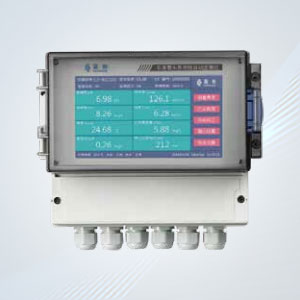
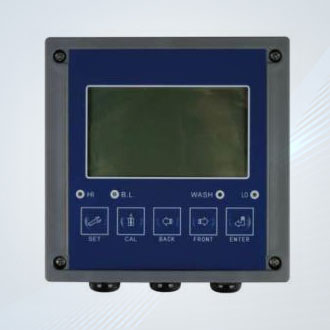
Water quality analyzers are widely used in environmental monitoring, municipal water supply and drainage, industrial production, agricultural irrigation, and scientific research fields. They can detect a variety of water quality indicators, including physical indicators (temperature, turbidity, conductivity), chemical indicators (pH, COD, BOD, ammonia nitrogen, heavy metals), and biological indicators (total coliforms, Escherichia coli). The core functions and technical advantages of water quality analyzers directly determine the efficiency and reliability of water quality detection, and are crucial for improving water quality management levels and promoting ecological environment protection.
2. Core Functional Modules of Water Quality Analyzers
Modern water quality analyzers are highly integrated systems, whose core functions are built on five interconnected modules, covering the entire process of water quality detection from sample processing to data output. Each module cooperates with each other to ensure the accuracy, efficiency, and reliability of detection results.
2.1 Sample Pretreatment Module
Sample pretreatment is the key link to ensure detection accuracy, as impurities, suspended solids, and interfering substances in water samples will affect the detection results of subsequent indicators. The sample pretreatment module of water quality analyzers integrates functions such as filtration, centrifugation, digestion, and dilution, realizing automatic pretreatment of water samples without manual intervention.
Key functions include: automatic filtration to remove suspended solids and particulate impurities with particle size greater than 0.45μm; high-temperature digestion to decompose organic pollutants and heavy metal complexes in water samples into measurable forms; automatic dilution of high-concentration samples to avoid over-range detection errors; and sample preservation to prevent the change of water quality indicators during detection. This module effectively reduces the interference of complex water matrices on detection results and lays a foundation for accurate detection.
2.2 Multi-Indicator Detection Module
The multi-indicator detection module is the core functional unit of water quality analyzers, responsible for the quantitative detection of various physical, chemical, and biological indicators in water samples. According to different detection principles, this module integrates multiple detection technologies, including optical detection, electrochemical detection, and biological detection, to meet the detection needs of different indicators.
Specific functions include: (1) Physical indicator detection: Using optical turbidity sensors, conductivity sensors, and temperature sensors to detect turbidity, conductivity, temperature, and other indicators in real time, with fast response and high stability; (2) Chemical indicator detection: Adopting ultraviolet-visible spectrophotometry, electrochemical method, and titration method to detect pH, oxidation-reduction potential (ORP), chemical oxygen demand (COD), biochemical oxygen demand (BOD), ammonia nitrogen (NH3-N), total phosphorus (TP), total nitrogen (TN), and heavy metals (Pb, Hg, Cd, Cr) and other indicators; (3) Biological indicator detection: Using microbial sensor technology and fluorescence detection technology to detect total coliforms, Escherichia coli, algae density, and other biological indicators, realizing rapid and accurate qualitative and quantitative analysis.
2.3 Data Acquisition and Processing Module
This module is responsible for collecting, converting, and processing the detection signals output by the multi-indicator detection module, converting the electrical signals generated by the sensors into measurable digital data, and completing data calibration, error correction, and analysis.
Key functions include: high-frequency data acquisition with adjustable sampling interval (1s-24h) to ensure the comprehensiveness of data; automatic calibration using built-in standard solutions to eliminate sensor drift and improve detection accuracy; data filtering and denoising to remove invalid data and interference signals; and data analysis to calculate the average value, maximum value, minimum value, and standard deviation of detection results, providing a basis for water quality evaluation. The module is equipped with a large-capacity data storage unit, which can store more than 100,000 groups of detection data, supporting offline data retrieval and playback.
2.4 Intelligent Control and Alarm Module
The intelligent control and alarm module realizes the automatic operation and abnormal early warning of water quality analyzers, reducing manual intervention and improving the efficiency of equipment operation.
Intelligent control functions include: automatic start and stop of detection, automatic switching of detection indicators, automatic cleaning of detection channels, and remote parameter configuration, realizing unattended operation of the instrument. Alarm functions include: setting upper and lower limits of each water quality indicator according to national and industry standards (such as GB 5749-2022 Drinking Water Quality Standard, GB 8978-1996 Integrated Wastewater Discharge Standard); triggering multi-modal alarms (audible, visual, SMS, and platform push) when the detection results exceed the preset threshold; and real-time alarm for equipment faults (sensor failure, reagent depletion, pipeline blockage) to remind maintenance personnel to handle them in time.
2.5 Data Transmission and Output Module
This module is responsible for the transmission and output of detection data, facilitating data sharing, management, and application. It supports multiple data transmission modes, including wired transmission (Ethernet, RS485/Modbus) and wireless transmission (4G/5G, LoRa, NB-IoT), which can transmit detection data to the cloud monitoring platform, local server, or mobile terminal in real time.
Data output functions include: real-time display of detection results through the touch screen; printing of detection reports (supporting custom report formats) through the built-in printer; and data export through USB, SD card, or network, facilitating data analysis and filing. For online water quality analyzers, this module can realize the connection with the environmental supervision platform, ensuring that the detection data is directly uploaded to the relevant departments for compliance supervision.
3. Key Technical Advantages of Water Quality Analyzers
Compared with traditional water quality detection methods (manual sampling + laboratory analysis, simple instrument detection), water quality analyzers have significant technical advantages in detection accuracy, efficiency, intelligence, and applicability, which are the core reasons for their wide application in various fields.
3.1 High Detection Accuracy and Reliability
Water quality analyzers adopt advanced detection technologies and high-precision sensors, and integrate automatic calibration and error correction functions, which effectively improve the accuracy and reliability of detection results. The relative error of key indicators (such as COD, ammonia nitrogen, and heavy metals) is ≤±2% FS, and the detection resolution reaches ppb level, which can accurately detect trace pollutants in water samples.
In addition, the instrument adopts industrial-grade component design, with strong anti-interference ability (anti-electromagnetic interference, anti-voltage fluctuation), and can maintain stable detection performance in complex environments (such as high temperature, high humidity, and high dust). The built-in quality control system can automatically verify the detection results, ensuring the comparability and credibility of data, which is in line with the requirements of national and international detection standards (ISO 17294, USEPA Methodologies).
3.2 High Detection Efficiency and Real-Time Performance
Water quality analyzers realize the automation of the entire detection process from sample pretreatment to data output, which greatly shortens the detection cycle and improves detection efficiency. For conventional indicators (pH, turbidity, conductivity), the detection can be completed in 10-30 seconds; for complex indicators (COD, BOD, heavy metals), the detection cycle is only 5-30 minutes, which is hundreds of times faster than traditional manual detection methods.
Online water quality analyzers can realize 24-hour uninterrupted real-time monitoring, with adjustable detection frequency, which can timely capture the dynamic changes of water quality indicators and provide real-time data support for pollution early warning and emergency disposal. Portable water quality analyzers can complete on-site rapid detection, without the need for sample transportation and laboratory analysis, which is especially suitable for emergency pollution accidents and field water quality surveys.
3.3 Strong Intelligence and Automation
Modern water quality analyzers integrate embedded intelligent control systems, realizing full-process automatic operation without manual intervention. The instrument can automatically complete sample collection, pretreatment, detection, calibration, data processing, and alarm, reducing the labor intensity of operators and avoiding human errors caused by manual operation.
Advanced models integrate AI algorithms, which can realize intelligent functions such as automatic identification of water quality types, optimization of detection parameters, and prediction of water quality changes. The remote management function supports remote parameter configuration, firmware upgrade, and fault diagnosis, realizing centralized management of multiple instruments and reducing on-site maintenance costs. The plug-and-play design of sensors and reagents makes the operation of the instrument simpler and more convenient, and reduces the professional requirements for operators.
3.4 Multi-Indicator Integration and High Scalability
Water quality analyzers adopt a modular design, which can integrate multiple detection modules to realize simultaneous detection of multiple water quality indicators (up to 20+ indicators), avoiding the trouble of separate detection of a single indicator and improving detection efficiency. The modular design also makes the instrument have strong scalability, and users can add detection modules or sensors according to actual detection needs, without replacing the entire instrument, reducing the investment cost of equipment update and transformation.
In addition, the instrument is compatible with various types of water samples, including surface water, groundwater, industrial wastewater, municipal sewage, drinking water, and agricultural irrigation water, and can be adjusted according to the characteristics of different water samples to ensure the accuracy of detection results.
3.5 Energy Saving, Environmental Protection and Low Operation Cost
Water quality analyzers adopt low-power chip design and energy-saving control technology, which greatly reduces power consumption. Online instruments have a power consumption of ≤50W, and portable instruments have a power consumption of ≤10W, supporting battery power supply and solar power supply, which is suitable for long-term unattended operation in remote areas without power supply.
The instrument uses environmentally friendly reagents and adopts a micro-volume detection technology, which reduces the usage of reagents and the generation of chemical waste, reducing secondary pollution to the environment. At the same time, the automatic cleaning and maintenance functions of the instrument extend the service life of sensors and components, reduce the frequency of parts replacement, and lower the long-term operation and maintenance costs of the instrument.
4. Key Technical Indicators Determining Performance
The technical advantages of water quality analyzers are closely related to their core technical indicators, which directly determine the detection performance and application effect of the instrument. When selecting and using water quality analyzers, it is necessary to focus on the following key technical indicators:
- Detection Range: The minimum and maximum concentration values that the instrument can detect for each indicator, which needs to be matched with the actual water quality pollution level. For example, the COD detection range of industrial wastewater analyzers is usually 0-5000 mg/L, while the COD detection range of drinking water analyzers is 0-100 mg/L.
- Accuracy and Resolution: Accuracy is usually expressed by relative error, and the relative error of key indicators should be ≤±2% FS; resolution refers to the minimum concentration change that the instrument can distinguish, and the resolution of trace indicators (such as heavy metals) should reach 0.01 ppb.
- Response Time: The time required for the instrument to output a stable detection result after the sample is added, which is usually 10s-30min, depending on the type of indicator. The shorter the response time, the better the real-time performance of the instrument.
- Stability: The ability of the instrument to maintain consistent detection accuracy within a certain period of time (24h or 72h), usually evaluated by zero drift and span drift. The zero drift should be ≤±1% FS/24h, and the span drift should be ≤±2% FS/24h.
- Environmental Adaptability: The ability of the instrument to work stably in different environments, including working temperature (-40℃~85℃ for industrial-grade instruments, 0℃~40℃ for laboratory instruments), relative humidity (0~95% RH, non-condensing), and protection level (IP65 for online instruments, IP67 for portable instruments).
5. Conclusion
Water quality analyzers, as core equipment for water quality detection and environmental governance, have comprehensive core functions covering sample pretreatment, multi-indicator detection, data processing, intelligent control, and data transmission. Compared with traditional detection methods, they have significant technical advantages such as high detection accuracy, high efficiency, strong intelligence, multi-indicator integration, and low operation cost, which have effectively promoted the modernization and refinement of water quality management.
In the context of increasingly stringent water quality standards and growing demand for water safety, water quality analyzers play an irreplaceable role in environmental monitoring, municipal water supply and drainage, industrial production, and other fields, providing reliable data support for water pollution control, water resource protection, and public health security. With the continuous advancement of sensor technology, artificial intelligence, and microelectronics technology, water quality analyzers will further develop towards miniaturization, intelligence, high precision, and multi-functional integration, and their application scope will be further expanded.
For relevant practitioners, mastering the core functions and technical advantages of water quality analyzers, and selecting appropriate instruments according to actual detection needs, is crucial to improving detection efficiency and ensuring data reliability. In the future, the continuous innovation and standardized application of water quality analyzers will inject new momentum into water resource protection and ecological environment governance, and contribute to the realization of sustainable development of water resources.