Why Does the Platform Matter as Much as the Sensors?
A
water-quality sensor that publishes measurements that no one ever sees is functionally identical to a sensor that does not exist. The platform is what delivers measurements to operators, regulators, and analytics. A poor platform produces unreliable data, missed alarms, and operator distrust even when the sensors are accurate.
Platform failures are also the most expensive to recover from. Replacing a sensor is a field operation. Replacing a platform is a multi-month migration involving data, integrations, dashboards, and operator training. Platform selection is therefore a strategic decision, not a procurement detail.
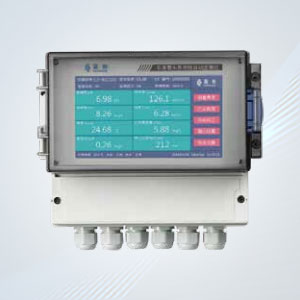
The Lanchuang secure intelligent terminal and the smart water management platform together represent a coordinated platform strategy that couples field-proven edge devices with a documented telemetry and analytics architecture.
What Functions Must the Platform Provide?
A defensible IoT monitoring platform for water and environment provides the following functional blocks.
|
Function |
Purpose |
Why It Matters |
|
Device management |
Provision, configure, monitor, and update devices |
Operational efficiency and security |
|
Telemetry ingest |
Receive data over MQTT, HTTPS, or other protocols |
Single integration point |
|
Time-series storage |
Efficient storage and retrieval of measurements |
Performance and cost control |
|
Schema validation |
Reject or flag malformed data |
Data quality at the boundary |
|
Alarm management |
Threshold, rate-of-change, and multi-sensor rules |
Operator situational awareness |
|
Dashboards |
Visualize trends, alarms, and assets |
Decision support |
|
APIs |
Expose data to regulators, partners, and analytics |
Interoperability |
|
Auditing |
Log every configuration change and operator action |
Compliance and incident response |
|
Backup and recovery |
Protect against data loss and platform failure |
Business continuity |
A platform that lacks any of these is not a platform; it is a feature.
What Protocols Should the Platform Support?
Protocol support is the primary interoperability requirement. The platform should speak the protocols used by the field devices and should expose data in formats consumed by regulators and partner systems.
|
Protocol |
Use |
Strengths |
|
MQTT / MQTT-SN |
Field telemetry |
Lightweight, publish-subscribe, scalable |
|
HTTPS / REST |
Application integration |
Universal, easy to secure |
|
OPC UA |
Industrial integration |
Semantic modeling, security |
|
Modbus TCP |
Industrial integration |
Simple, widely supported |
|
LoRaWAN |
Wide-area telemetry |
Long range, low power |
|
NB-IoT / LTE-M |
Cellular telemetry |
Wide coverage, managed networks |
|
Sparkplug B |
Industrial MQTT |
Defined payload, metric tags |
|
SensorThings API |
Environmental data sharing |
OGC standard, REST |
A platform that requires a proprietary protocol at the field edge locks the deployment to a single vendor. A platform that supports open protocols at the edge and at the API layer allows the deployment to evolve.
How Is Schema Validation Implemented?
Schema validation is the discipline that catches data corruption at the boundary. Each telemetry message must conform to a defined schema (value type, unit, range, calibration context) before it is accepted into the time-series store.
A typical implementation:
Define a JSON schema or equivalent for each measurement type.
Validate incoming messages against the schema.
Reject or flag invalid messages, with reason codes.
Maintain a count of invalid messages and trend it.
Schema validation is the first line of defense against device misconfiguration, firmware corruption, and integration errors. It is also a regulatory expectation for data quality.
How Is Edge Processing Integrated?
Edge processing is the local computation at the gateway that reduces latency, bandwidth, and dependence on cloud connectivity. The platform must support edge nodes as first-class entities, not as opaque boxes.
A well-designed platform treats edge nodes as:
Devices that can run local logic and AI inference.
Buffering nodes that store-and-forward during connectivity loss.
Aggregators that summarize data before transmission.
Local alarm engines that run independent of cloud availability.
The secure intelligent terminal at Lanchuang implements these functions with documented APIs and a local UI for configuration.
How Is Cybersecurity Engineered Into the Platform?
Cybersecurity is the most rapidly evolving requirement for IoT platforms. The platform must enforce controls at the device edge, the transport, the API, and the operator access layer.
|
Layer |
Control |
Implementation |
|
Device |
Mutual TLS, signed firmware, hardware secure element |
X.509 certificates per device |
|
Transport |
Mutual TLS, certificate pinning, MQTT v5 with auth |
Broker configuration, topic ACLs |
|
API |
OAuth 2.0 or OpenID Connect, role-based access |
Identity provider integration |
|
Operator |
MFA, session timeout, audit logging |
Identity management, SIEM integration |
|
Platform |
Vulnerability scanning, patch management, segregation |
Operational processes and tooling |
A platform that delegates cybersecurity to the customer by shipping default passwords or by lacking certificate support is unfit for regulated industries.
How Is Reliability Engineered?
Reliability is the platform's ability to continue operating when components fail. The architecture should assume that the cellular tower will fall, that the broker will restart, and that a software update will be interrupted.
Reliability features include:
Local store-and-forward at the edge for several days of data.
Redundant broker deployment (clustered or replicated).
Database replication with point-in-time recovery.
Geographic redundancy for cloud-hosted components.
Documented disaster recovery procedures with tested RTO and RPO.
The platform's reliability is only as good as its weakest component. A cloud-hosted platform with a single broker and a single database is not a platform that meets industrial reliability expectations.
How Is Time Synchronization Handled?
Time synchronization has been raised to a first-class requirement for any monitoring system that correlates events across sites. Each device must run NTP or PTP against a trusted source, and each measurement must carry the disciplined time.
The platform should:
Receive and store timestamps in UTC.
Validate timestamp plausibility (no future dates, no stale data beyond an expected latency).
Expose time quality metrics in dashboards.
Support time correction at ingest when device clocks drift.
Time-quality metrics are themselves data quality signals. A site with NTP outage should be flagged in the same way as a sensor with calibration drift.
How Is Data Validation Applied?
Data validation applies rules to each measurement before it is published to dashboards, regulators, or analytics. Validation may reject the value, flag it, or substitute a value per documented rules.
Common validation rules include:
Range checks against expected minima and maxima.
Rate-of-change checks to flag stuck or runaway sensors.
Persistence checks to flag flatlines.
Cross-parameter checks (pH and conductivity consistency, dissolved oxygen and temperature).
Calibration context checks to flag measurements from out-of-calibration sensors.
Validation should be implemented as close to the data source as possible (edge or ingest), and the validation decisions should be retained for audit.
How Are Alarms Engineered?
Alarms are what translate measurements into action. A defensible alarm system implements thresholds, rate-of-change, and multi-sensor rules; supports escalation and acknowledgment; and integrates with operator workflows.
|
Alarm Class |
Example |
Latency Target |
Acknowledgment Required |
|
Critical |
Spill, exceedance, structural alarm |
Seconds |
Yes, with role check |
|
Warning |
Approaching threshold |
Minutes |
Yes |
|
Maintenance |
Calibration due, battery low |
Hours |
No |
|
Information |
Status change, configuration change |
At convenience |
No |
Alarms must not flood the operator. An alarm storm is itself a failure. The platform should support grouping, suppression, and rolling-window thresholds to manage alarm load.
How Is the Platform Operated?
Operation is the long-term cost of a platform. The architecture must support operational efficiency through:
Centralized device management with remote configuration and firmware update.
Automated health checks and self-healing where appropriate.
Documented runbooks for common incidents.
Capacity planning driven by observed load, not by peak theoretical load.
Clear ownership between IT and OT teams.
A platform that requires a specialist for every operation does not scale. The goal is automation of routine tasks with a clear escalation path for exceptions.
How Is Migration to the Platform Managed?
Migration from an existing platform or from legacy field instrumentation is the moment of greatest risk. The migration plan should include:
Parallel operation during the transition period.
A documented data mapping between old and new schemas.
Backfill of historical data with metadata that documents its origin.
A rollback plan that returns the system to the prior state if needed.
Operator training on the new platform before cutover.
Migration should be planned as a project with explicit gate criteria, not as a series of incremental changes. The cost of getting migration wrong is greater than the cost of doing it well.
Conclusion
An IoT monitoring platform for smart water and environment is the integration layer that turns sensors into decisions. A defensible platform supports open protocols, schema validation, alarm management, role-based access, cybersecurity controls, and reliability features such as store-and-forward and time synchronization. The platform is selected as carefully as the field sensors, and it must be operated with the same discipline. The secure intelligent terminal, multi-parameter digital transmitter, and smart water management portfolio at Lanchuang is built on this principle, with documented protocols, edge and cloud capabilities, and a cybersecurity posture that meets regulated industry expectations.
Frequently Asked Questions
What is the most common platform failure mode?
The most common failure mode is uncontrolled schema drift, where new device types or new firmware versions change the data shape without platform awareness. The result is silent data loss. Schema validation at ingest prevents this.
Should the platform be self-hosted or cloud-hosted?
Self-hosting is appropriate when data sovereignty, integration with plant DCS, or air-gapped operation is required. Cloud hosting reduces operational burden when the team lacks 24/7 platform expertise. Hybrid models combine local processing with cloud aggregation.
How long should telemetry data be retained?
Telemetry retention depends on regulatory requirements and the analysis horizon. A common practice is to retain raw data for 1–3 years and aggregated data indefinitely. Storage cost can be managed by downsampling older data.
What is the difference between MQTT and HTTPS for telemetry?
MQTT is a lightweight publish-subscribe protocol optimized for high-frequency, low-bandwidth telemetry. HTTPS is a request-response protocol that is simpler to integrate but less efficient. MQTT is preferred for high-volume telemetry; HTTPS is appropriate for low-volume, event-driven messages.
How is platform compliance demonstrated?
Compliance is demonstrated through documented processes (change management, incident response, backup testing), retained records (audit logs, configuration backups), and periodic audits (internal and external). Compliance evidence is part of the operational runbook.
How is firmware update managed at scale?
Firmware updates use staged rollouts: a small pilot group, then a larger group, then full deployment. The platform monitors error rates and rollback rates and halts the rollout if thresholds are exceeded. Updates are signed and verified at the device.
How is the platform sized for growth?
The platform is sized using observed peak load plus headroom for new sites, new sensors, and new analytics. Cloud-hosted platforms scale elastically; self-hosted platforms require capacity planning reviews quarterly or after each major addition.