Why Are Multi-Parameter Stations the Standard Architecture?
Most water-quality monitoring objectives require more than a single parameter. A surface-water station reports pH, dissolved oxygen, conductivity, turbidity, temperature, ammonia, total nitrogen, total phosphorus, and sometimes chlorophyll or UV254. An industrial outfall reports pH, COD, total nitrogen, total phosphorus, heavy metals, and flow. A drinking water station reports residual chlorine, turbidity, pH, and conductivity.
Housing each parameter in a separate instrument would multiply capital cost, sample handling, maintenance visits, and integration complexity. A multi-parameter station consolidates the sensors around a common flow system, shares a controller and telemetry, and reduces the per-parameter cost of ownership. It has become the default architecture for surface-water, source-water, and many industrial monitoring objectives.
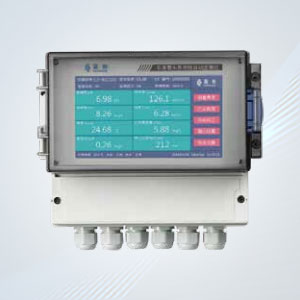
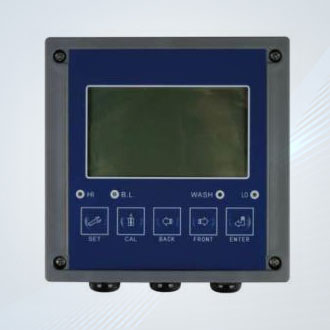
The water quality multi-parameter online automatic monitor product line from Lanchuang follows this architecture, with configurable sensor slots, automatic cleaning, and a controller that integrates with the secure intelligent terminal for telemetry.
How Should a Monitoring Site Be Selected?
Site selection determines whether the data represents the body of water or a convenient but unrepresentative point. A poor site produces defensible-looking data that is biased toward whatever local phenomenon the station happened to capture.
A defensible site selection considers:
Representativeness of the water body. Avoid points where localized inflows, sediment plumes, or stagnation dominate.
Mixing and flow conditions. Well-mixed sections produce repeatable measurements; stratified sections require multi-depth profiling.
Accessibility for routine maintenance, calibration, and emergency repair.
Security from vandalism, flooding, and accidental damage.
Power availability, with backup, and telemetry coverage.
Compliance with regulator guidance on distance from banks, bridges, and outfalls.
For rivers, the centroid of the cross-section at a stable, straight reach is preferred. For lakes and reservoirs, multi-depth stations are common. For industrial outfalls, post-treatment but pre-mixing-with-receiving-water is preferred where the regulation targets the discharger.
What Is the Role of the Sample Handling System?
The sample handling system moves water from the source to the sensors, conditions it, and returns or drains it. It is the largest source of unrecovered errors when poorly designed.
Key design choices include:
Flow-through vs. by-pass. A flow-through design places probes directly in the sample line; a by-pass uses a small slip-stream diverted from a larger pipe. Flow-through is faster but harder to clean; by-pass is gentler and easier to isolate for service.
Residence time. Long residence times allow temperature equilibration but risk biological growth and gas exchange.
Self-cleaning provisions. Y-strainers, brushes, and chemical wipers keep debris off the probes.
Material selection. Stainless steel, PVC, and PVDF are common. Avoid materials that leach or adsorb target analytes.
A poorly designed sample system produces data that drifts whenever the pump cycles, whenever ambient temperature changes, or whenever the cleaning cycle runs. Each artifact is a fingerprint of the sample system, not the water body.
Why Is Anti-Fouling So Important?
Fouling is the dominant failure mode for unattended water-quality stations. Biofilm, suspended solids, oil, and chemical precipitation coat the sensing surfaces and shift the readings. The shift can be slow (a slow drift in pH slope) or sudden (a turbidity window obscured by a sediment layer).
Anti-fouling strategies are layered:
|
Strategy |
Purpose |
Typical Implementation |
|
Mechanical cleaning |
Remove soft fouling |
Brushes, wipers, ultrasonic heads |
|
Chemical cleaning |
Remove chemical scale and biofilm |
Compressed air with dilute acid or chlorine |
|
Flow control |
Prevent stagnation and settling |
Continuous flow with bypass and bypass flush |
|
Surface treatment |
Reduce adhesion |
Anti-fouling coatings, copper-alloy fittings |
|
Probe placement |
Reduce exposure |
Recessed or sheltered mounting |
Anti-fouling must be tested against the actual matrix. A cleaning cycle that works for a clean surface-water intake will be inadequate for a wastewater outfall. The maintenance interval should be tuned to the matrix and re-tuned after any change.
How Is Calibration Maintained Across Multiple Sensors?
Calibration of a multi-parameter station must address each sensor's individual drift behavior while coordinating the maintenance visit. A practical approach is to define a parameter-specific verification schedule and a station-level maintenance log.
Best practice includes:
Per-sensor serial numbers and per-sensor calibration history.
A maintenance record that captures which sensors were verified, against what standards, and what was found.
Coordinated verification at one visit when sensors drift at similar rates.
Per-sensor verification when drift rates differ (for example, pH weekly, conductivity monthly).
Trend analysis of slope, zero, and response time, with proactive replacement before failure.
The station controller should expose calibration diagnostics as telemetry, not just as a local interface. This allows remote trending and predictive maintenance.
How Is Data Validated Before Publication?
Data validation is what separates a measurement from a defensible record. A station must flag invalid periods (probe out of calibration, sample line blocked, cleaning cycle in progress, telemetry gap) and propagate those flags to downstream consumers.
A practical validation regime includes:
Range checks against expected minima and maxima for the matrix.
Rate-of-change checks to flag stuck probes or telemetry noise.
Cross-parameter checks (pH and conductivity consistency, dissolved oxygen and temperature consistency).
Calibration residual checks that flag the period between verification failures.
Reason codes for downtime (planned maintenance, probe replacement, power outage, sample system fault).
Regulators increasingly require the full validation history. The DAHS must retain raw values, applied corrections, and the validation decisions with timestamps and operator IDs.
What Power and Connectivity Provisions Are Required?
Stations at remote sites need power and connectivity that survive unattended operation for weeks or months. Power design typically combines mains supply where available, with battery and solar backup. Solar sizing must account for the worst winter month, not the average.
Connectivity design typically combines a primary cellular link (4G/5G) with a secondary LoRaWAN or satellite fallback. Local buffering at the station must be sized for the longest expected outage.
Power and connectivity are the operational foundations. A station that loses power for three days loses three days of data unless the buffer and battery are sized accordingly. A station that loses connectivity loses the operator's awareness of the station's condition.
How Is Cybersecurity Handled?
A monitoring station that reports to a cloud platform is an IoT device and is exposed to the same threats as any other connected device. Cybersecurity controls include signed firmware, mutual TLS for telemetry, role-based access for service laptops, and network segmentation between the OT network and any external connection.
Stations should be inventoried in a configuration management database with firmware versions and last-known-good configurations. Unauthorized configuration changes should be alerted. Physical security (locks, tamper switches) is part of cybersecurity because it protects the credentials and the firmware.
What Maintenance Practices Maximize Data Availability?
Data availability is the ratio of valid hours to total hours in a reporting period. High availability is achieved by anticipating failures, not by reacting to them.
Useful practices include:
Trending calibration residuals and replacing probes before they fail.
Routine replacement of consumables (membranes, electrolytes, lamp modules) on a calendar cycle, not a failure cycle.
Spare-probe rotation so a failed probe can be swapped in minutes, not hours.
Field service kits with reference standards, tools, and a documented procedure.
Quarterly review of data availability, downtime causes, and corrective actions.
These practices are unglamorous, but they determine whether the station produces a multi-year, regulator-defensible record or a series of interruptions.
How Does the Station Integrate With Enterprise Systems?
The station is a data source. Its output must reach the enterprise historian, the regulator submission system, the operator's dashboard, and the maintenance system. Each destination may require a different format, a different latency, and a different quality flag.
A common integration pattern is:
Station → MQTT or HTTPS → Edge gateway → Cloud platform.
Cloud platform → Time-series storage, GIS overlay, validation.
Validation → Operator dashboard, regulator export, maintenance system.
Standards-based data models (SensorThings API, OGC Observations and Measurements) reduce custom integration. Where regulators mandate specific schemas, the platform must produce those schemas without manual reformatting.
Conclusion

A
multi-parameter water quality monitoring station is an integrated engineering product, not a sensor with extras. It succeeds when site selection produces a representative sample, sample handling preserves integrity, anti-fouling keeps probes within drift budgets, calibration and verification are documented and disciplined, and data validation flags every invalid period before export. The Lanchuang multi-parameter online monitor, paired with the COD analyzer and secure intelligent terminal, is designed for this discipline, with diagnostics exposed at the controller for trending and remote maintenance.
Frequently Asked Questions
How is a multi-parameter station different from a single-parameter instrument?
A multi-parameter station hosts several sensors in a common flow path with shared control and telemetry. A single-parameter instrument has one sensor and one controller. The station reduces per-parameter cost and integration overhead when more than a few parameters are needed.
How often should probes be cleaned?
Cleaning frequency depends on fouling rate. Surface water may need daily cleaning; industrial wastewater may need cleaning every few hours. The interval should be tuned by observed drift, not by the vendor default.
How is calibration traceable to a national standard?
Calibration standards are purchased from ISO 17025-accredited suppliers with certificates of analysis. The certificate ties the working standard to a national metrology institute through the supplier's accreditation chain.
Can a station run unattended for a month?
Yes, with appropriately sized power backup, store-and-forward telemetry, and preventive maintenance. Most unattended stations require at least monthly site visits for verification, consumable replacement, and probe inspection.
What is the role of automatic cleaning?
Automatic cleaning reduces the rate of drift between manual cleanings. It does not eliminate manual maintenance. The cleaning cycle must be tested against the actual matrix and tuned accordingly.
How is data flagged during a cleaning cycle?
Most controllers suppress publication during the cleaning cycle, or they publish a "maintenance" flag. The DAHS should retain the cleaning event in the metadata so downstream consumers can identify the affected periods.
What is the difference between data validation and data quality?
Validation is the act of checking each value against rules and flagging failures. Data quality is the outcome of validation, expressed as completeness, validity, and uncertainty metrics. Both are required for defensible reporting.