Why Is Calibration the Foundation of Water Quality Monitoring?
A sensor reading is only as credible as the chain of evidence that supports it. When a turbidity probe reports 12 NTU, the question is not whether the probe can measure light scatter; it is whether the value is traceable to a primary standard such as formazin, whether the cleaning regime has not shifted the optical path, and whether the verification log shows the probe was within its drift budget at the last check. Calibration is the discipline that connects the probe to the standard.
Online water-quality stations run unattended for weeks between service visits. During that time the chemistry of the sample, the fouling rate, the temperature, and the optical or electrochemical surface drift. A monitoring program that ignores drift eventually publishes trends that are sensor drift rather than water-quality trends. That is how operators miss a real incident, or worse, raise a false alarm that costs credibility with regulators and the public.
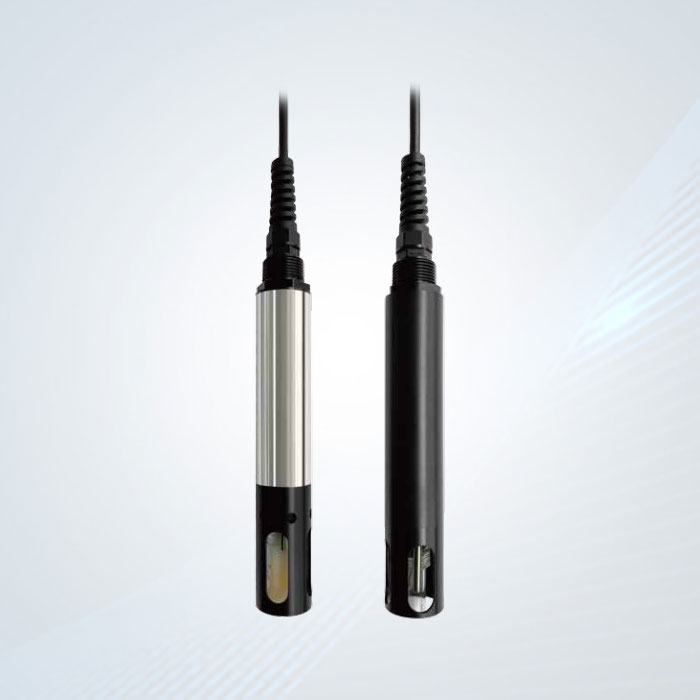
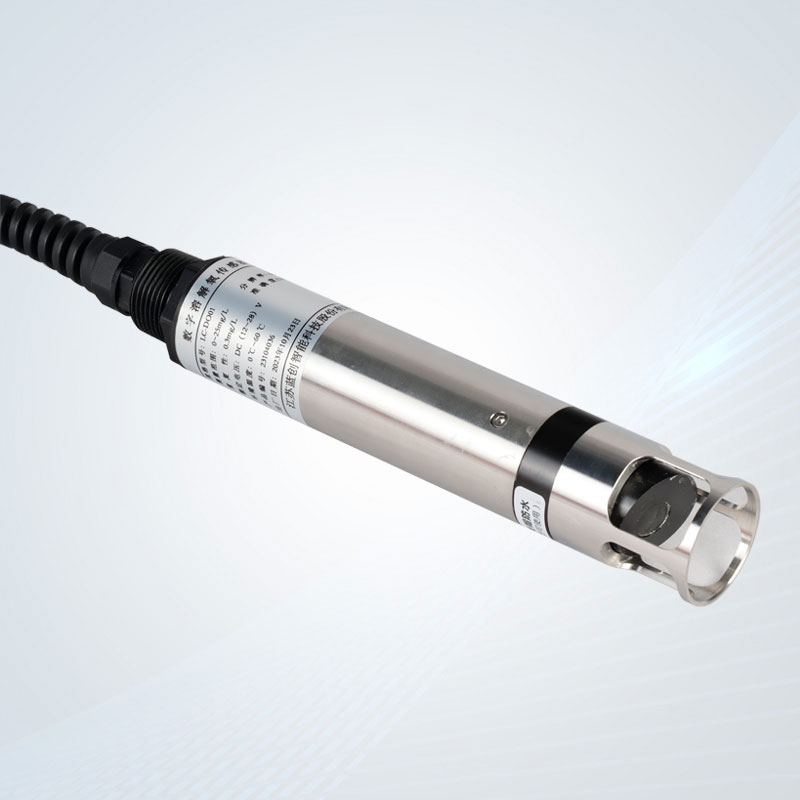
The water quality sensor family from Lanchuang supports multi-point calibration buffers and exposes diagnostic data such as slope, zero offset, and reference voltage. Using those features deliberately is the difference between a defensible station and a decorative one.
What Reference Standards Apply to Water Quality Calibration?
Calibration traceability is established when the reference material used to set the sensor can be linked, through an unbroken chain of comparisons, to a national or international standard. The chain typically flows from a primary standard held by a national metrology institute, through certified reference materials produced by accredited suppliers, to working standards held by the field laboratory, to the sensor as installed.
|
Parameter |
Primary Standard Family |
Working Standard Typical Form |
|
pH |
NIST/PTB primary buffer materials (hydrogen electrode) |
Commercial pH buffers at pH 4.01, 7.00, 10.01, traceable to NIST |
|
Conductivity |
Potassium chloride with defined molar conductivity at temperature |
KCl solutions at 84 µS/cm, 1413 µS/cm, 12.88 mS/cm, 50 mS/cm |
|
Turbidity |
Formazin polymer suspension (ISO 7027) |
Formazin or styrene divinyl benzene polymer standards, 0–4000 NTU |
|
Dissolved Oxygen |
Air-saturated water with Winkler titration |
Air-saturated water, sodium sulfite zero solution |
|
Ammonia Nitrogen |
Certified ammonium standard solutions |
NH4Cl standards prepared from certified stocks |
|
Total Nitrogen |
Persulfate digest followed by nitrate standard |
KNO3 standards traceable to NIST |
|
Total Phosphorus |
Ascorbic acid method against phosphate standards |
KH2PO4 standards traceable to NIST |
|
COD / UV254 |
Potassium hydrogen phthalate primary standard |
KHP standards, 100–1000 mg/L |
Working standards should be purchased from suppliers that operate under ISO 17025 accreditation and that publish a certificate with each lot. In-house dilution is acceptable when pipettes, volumetric glassware, and balances are themselves calibrated and the procedure is documented.
How Many Calibration Points Are Required?
Single-point calibration assumes the sensor response is perfectly linear and that the zero or single span has not shifted. Real sensors drift non-uniformly. pH probes shift both slope and reference offset; conductivity cells shift cell constant; turbidity sensors shift both zero and span. Multi-point calibration captures both effects and detects non-linearity.
A practical baseline is two points for most parameters, with an optional third point when the operating range is wide. pH benefits from a three-point slope (acidic, neutral, basic) to detect glass degradation that affects slope rather than offset. Turbidity benefits from a zero and a mid-range standard, with a high-range standard added for wastewater applications.
The points should bracket the operating range, not cluster at one end. A turbidity sensor calibrated at 0 and 10 NTU and then operated in a mixed liquor at 800 NTU will have uncontrolled extrapolation error. Calibrate where the measurement happens.
What Is a Drift Budget and How Should It Be Used?
A drift budget is the maximum allowable change between scheduled verifications, expressed in absolute units or percent of reading. Drift budgets turn calibration discipline into a manageable engineering target rather than a vague aspiration.
|
Parameter |
Typical Drift Budget (after stabilization) |
Suggested Verification Interval |
|
pH |
±0.1 pH |
1–4 weeks depending on fouling |
|
Conductivity |
±2% of reading or ±5 µS/cm, whichever is larger |
1–4 weeks |
|
Turbidity |
±5% of reading or ±0.5 NTU below 10 NTU |
1–4 weeks |
|
Dissolved Oxygen |
±0.2 mg/L or ±2% saturation |
2–4 weeks |
|
Ammonia Nitrogen |
±5% of reading or ±0.1 mg/L |
1–4 weeks |
|
Total Nitrogen |
±5% of reading |
2–4 weeks |
|
Total Phosphorus |
±5% of reading |
2–4 weeks
|
When verification shows a probe is out of budget, the response is procedural: clean, re-verify, recalibrate if necessary, and replace if recalibration fails. The action and its result must be recorded so the trend can be reviewed later for predictive replacement.
How Should Field Verification Be Performed?
Field verification is a controlled check against an independent standard, run while the probe is in service. The procedure is to expose the probe to a known reference, observe the response, and compare it to the tolerance band. Verification proves that the as-installed measurement system is still in calibration without the cost of a full service visit.
Field verification should use:
Fresh, traceable working standards appropriate to the parameter.
A clean beaker or flow cell that does not contaminate the standard.
Temperature conditioning to within the operating range.
Sufficient equilibration time (often 5–15 minutes for pH, longer for ammonia).
A reading recorded at stable response, not at first contact.
Verification must distinguish a drifted probe from a contaminated standard. Rotating two independently prepared standards through the verification cycle protects against systematic error in either direction. When a probe fails verification, the suspect standard is tested against a fresh batch before the probe is condemned.
What Causes Drift and How Can It Be Controlled?
Drift has four common causes: fouling of the sensing surface, depletion of the reference electrolyte, mechanical damage to the membrane or electrode, and electronic drift in the transmitter. Each cause leaves a recognizable signature.
|
Drift Signature |
Likely Cause |
Corrective Action |
|
pH slope falls but offset stable |
Glass aging, protein fouling |
Clean with enzyme solution, replace if slope does not recover |
|
pH offset shifts negative |
Reference junction fouled, salt depletion |
Soak in KCl, refill or replace reference |
|
Conductivity reading low across range |
Cell constant change from fouling, coating on electrodes |
Clean, recalibrate cell constant |
|
Turbidity zero drifts upward |
Optical window fouling, condensation |
Clean window, dry air purge, re-zero |
|
DO response slow or low |
Membrane fouling or depletion |
Replace membrane cap, refill electrolyte |
|
Ammonia response low with stable slope |
Reference or membrane poisoning |
Replace membrane and electrolyte |
Preventive maintenance addresses the causes directly. Automatic cleaning with compressed air, brushes, or chemical wipers keeps fouling below the drift budget. Diagnostic signals such as slope, impedance, and response time are early indicators and should be trended.
What Documentation Is Required for Audit Defense?
Documentation is what turns a calibration program from a maintenance task into a defensible quality system. The records must allow a third party, possibly years later, to reconstruct the measurement uncertainty for any data point.
Required records typically include:
Sensor make, model, serial number, and date of installation.
Reference standards used, supplier, lot number, certificate, and expiry.
Calibration procedure and acceptance criteria.
As-found and as-left readings, with date, time, technician, and ambient conditions.
Verification logs and any corrective actions taken.
A chain-of-custody log for the probe (cleaning, repair, retirement).
Records should be stored in a tamper-evident system with electronic signatures where regulations require them. The goal is that an auditor can answer "What was the measurement uncertainty on day X?" by reading a single document.
How Often Should Calibration Be Re-Validated?
Calibration frequency is determined by drift behavior, regulatory requirements, and risk. A probe that drifts slowly in a clean matrix can run for a month between checks. A probe in a fouling-prone wastewater matrix may need weekly checks. Regulations often set maximum intervals, but they are ceilings, not targets.
A useful practice is to start with the vendor recommendation, then shorten or lengthen the interval based on observed drift. Trend the verification residuals. If a probe consistently drifts within budget with margin, the interval can be extended. If it drifts unpredictably, the interval is shortened and a root-cause investigation is opened.
The interval decision should be reviewed annually and after any change in matrix chemistry, flow, or maintenance regime.
How Does Calibration Interact with Multi-Parameter Probes?
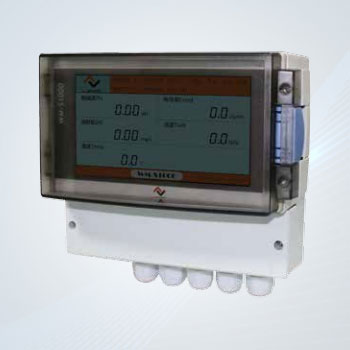
Multi-parameter probes, such as the multi-parameter digital transmitter platform, simplify cabling and integration but complicate calibration. Each parameter has its own drift behavior, and a single probe may host pH, conductivity, dissolved oxygen, and turbidity sensors in one body. The calibration program must address each parameter independently while coordinating the maintenance visit.
A practical approach is to define a parameter-specific checklist per probe body, run the verification sequentially during a single site visit, and record the results in a single maintenance record. The probe body and the individual sensors each have their own serial numbers and their own calibration history. Replacing a single sensor inside a probe body is generally more economical than replacing the body, and the records must reflect the per-sensor history.
Conclusion

Water-quality calibration is a discipline built on reference standards, multi-point curves, drift budgets, field verification, and audit-ready documentation. A defensible program selects traceable working standards, calibrates across the operating range, verifies on a schedule driven by observed drift, and records every action in a tamper-evident system. Buyers evaluating digital pH sensors and digital turbidity sensors should require calibration certificates with each probe and confirm the firmware exposes slope, zero, and response-time diagnostics for trend analysis.
Frequently Asked Questions
What is the difference between calibration and verification?
Calibration adjusts the sensor reading to match a standard. Verification confirms, without adjustment, that the as-installed reading is still within tolerance. Verification is cheaper and is performed more often.
Can tap water be used as a calibration standard?
No. Tap water is not traceable and its composition varies by season and treatment. Use certified reference materials prepared from traceable stocks.
What is a two-point vs. three-point pH calibration?
Two-point calibration uses acidic and neutral buffers. Three-point adds a basic buffer to confirm the slope at high pH. Three-point is recommended for probes exposed to a wide pH range or to high-pH cleaning cycles.
How is drift expressed?
Drift is expressed either as absolute change per unit time (for example, mV per week for a pH reference) or as percent of reading. The expression chosen must be stable across the operating range and easy to test in the field.
What is membrane poisoning in ammonia sensors?
Some dissolved species (surfactants, sulfides, heavy metals) bind to the gas-permeable membrane or the internal electrolyte and reduce or eliminate response. The probe appears to calibrate correctly but reads low in real samples. Routine verification with an independent standard is the only reliable defense.
Should calibration certificates be stored electronically?
Yes. Electronic records with controlled access, change logs, and where required electronic signatures are the modern standard. Paper records in a binder do not satisfy most current regulatory expectations.
How does fouling control improve calibration?
Fouling control (automatic wipers, chemical cleaning, ultrasonic heads) keeps the sensing surface close to its calibrated state between service visits, so verification is more likely to pass and drift budgets can be widened with confidence.