Continuous Monitoring System For Fixed Pollution Source Flue Gas Emissions: Working Principle & Guide
Release time:2026-09-21
Visits:0
1. What Is a Continuous Monitoring System for Fixed Pollution Sources?
A
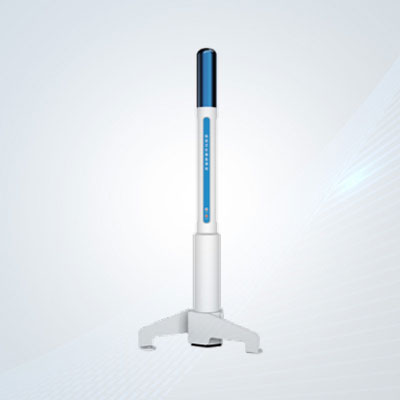
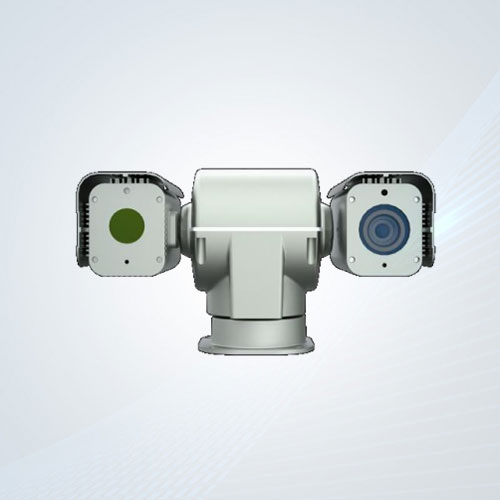
continuous monitoring system for fixed pollution source flue gas emissions — commonly called a CEMS — is an integrated system that measures, records and reports the pollutants emitted from a stack or chimney around the clock. Jiangsu Lanchuang Intelligent Technology Co., Ltd. produces the CEMS-8000L system for exactly this duty, turning raw flue gas into compliant, regulator-ready data in real time.
2. How the Continuous Monitoring System Works
The working principle of a CEMS is based on physical and chemical sensor technology combined with data acquisition and transmission technology. Through sampling, preprocessing, analysis, data acquisition and transmission, it achieves continuous monitoring of flue gas emissions.
2.1 Sampling and Preprocessing
Sampling probes extract flue gas from the stack, equipped with ceramic or stainless steel filters that remove dust to prevent blockage and damage to downstream equipment. The extracted sample then undergoes pretreatment — heating and transportation to prevent water vapor condensation, filtration to remove residual particulate, and condensation to lower the sample temperature for analysis.
2.2 Gas Analysis
The conditioned sample is sent to gas analyzers for component analysis of SO₂, NOx, O₂ and other gases. Analyzers use several technologies:
- Optical technology — ultraviolet, infrared and fluorescence spectroscopy, which measure gas concentration through the absorption of specific wavelengths.
- Electrochemical technology — measuring gas concentration through current or potential changes from electrode chemical reactions.
2.3 Particulate Matter Monitoring
A particulate matter monitor measures smoke and dust concentration using principles such as laser forward scattering and light scattering, deriving the mass concentration of particulate matter from scattered light intensity.
2.4 Flue Gas Parameter Monitoring
The system measures flow rate, temperature, pressure and humidity of the flue gas. These parameters are essential for accumulating total emissions and correcting concentrations — for example, flow velocity enables calculation of total flue gas emissions, while temperature and pressure correct analyzer readings.
2.5 Data Acquisition and Transmission
A data collector gathers all parameters in real time, processes them into dry-basis, wet-basis and converted concentrations, and generates cumulative emissions on daily, monthly and yearly scales. The processed data is transmitted in real time to environmental protection departments and monitoring centers through environmental data acquisition equipment or VPN.
3. Key Components of the CEMS-8000L System
- Sampling probe with ceramic/stainless steel filter.
- Pretreatment unit — heating, transport, filtration and condensation modules.
- Gas analyzers — SO₂, NOx, O₂ measurement.
- Particulate matter monitor — laser scattering dust measurement.
- Flue gas parameter sensors — flow, temperature, pressure, humidity.
- Data acquisition and processing unit — concentration conversion and emission accumulation.
- Communication module — real-time transmission to monitoring platforms.
4. Main Advantages of a Continuous Monitoring System
- Round-the-clock compliance — continuous measurement, not occasional sampling.
- Complete pollutant coverage — gases, particulate matter and flue parameters in one system.
- Defensible data — real-time transmission means the regulator sees the same data you submit.
- Early detection — immediate alarm on exceedances enables rapid corrective action.
- Total emission accounting — flow measurement enables daily, monthly and yearly emission totals.
5. Applications of Fixed Pollution Source CEMS
- Power plants and industrial boilers — flue gas emission compliance.
- Cement, steel and metallurgy plants — kiln and furnace stack monitoring.
- Chemical and petrochemical facilities — process vent and stack monitoring.
- Waste incineration plants — continuous emission control.
- Paper and other industrial furnaces — regulated fixed pollution sources.
6. How to Choose a Continuous Monitoring System
6.1 Confirm Pollutant Coverage
Ensure the system measures every pollutant on your permit — not just SO₂ and NOx, but also particulate matter and any site-specific parameters.
6.2 Evaluate the Sampling and Pretreatment Train
On high-dust and high-humidity stacks, the sampling probe and conditioning system determine long-term reliability. Ask how the system handles your actual flue conditions.
6.3 Check Data and Compliance Features
Verify dry/wet basis conversion, emission accumulation and real-time transmission to the format your regulator requires.
6.4 Assess Total Cost of Ownership
Consider filter, spare part and recalibration costs, not just the purchase price.
6.5 Review Supplier Capability
Choose a supplier with field deployment experience and a broader monitoring portfolio to cover the full compliance picture.
7. Conclusion: Why Choose Lanchuang Intelligent
Jiangsu Lanchuang Intelligent Technology Co., Ltd. is a national high-tech enterprise founded in 2009, specializing in ecological environment monitoring with more than 40 self-developed sensors and instruments. Its portfolio spans water environment, atmospheric environment and safety services, including VOCs online monitoring, dust monitoring and micro air stations — allowing a single partner to cover your entire emission compliance picture.
If your stack is becoming a regulated fixed pollution source, contact Lanchuang at the planning stage to configure the CEMS-8000L around your process conditions.