With the intensification of global environmental issues such as air pollution, water contamination, and soil degradation, controlling pollutant emissions has become a core task in environmental protection. Pollutant emission monitoring technologies serve as the "eyes" of environmental management, providing accurate, real-time, and comprehensive data on pollutant types, concentrations, and emission volumes. These technologies not only lay the foundation for formulating scientific environmental policies but also ensure the effective implementation of emission reduction measures, promote green industrial development, and safeguard ecological balance and human health. This article comprehensively analyzes the main types, working principles, and technical characteristics of pollutant emission monitoring technologies, and deeply explores their core role in environmental protection, providing a practical reference for environmental practitioners, industrial enterprises, and relevant management departments.
I. Overview of Pollutant Emission Monitoring Technologies
Pollutant emission monitoring technologies refer to a series of methods and equipment used to detect, quantify, and record pollutants discharged from industrial production, urban life, transportation, and other sources. According to the monitoring medium, monitoring scope, and technical principles, they can be divided into different categories, each with unique applicability and advantages. The core goal of these technologies is to obtain reliable monitoring data, which is the premise for evaluating environmental quality, identifying pollution sources, and implementing emission control.
In general, pollutant emission monitoring technologies are mainly classified based on three dimensions: monitoring medium (atmospheric, water, soil, and solid waste), monitoring method (online continuous monitoring, offline laboratory monitoring, and remote sensing monitoring), and monitoring object (inorganic pollutants, organic pollutants, particulate matter, and greenhouse gases).
II. Main Types and Working Principles of Pollutant Emission Monitoring Technologies
Different pollutant emission monitoring technologies vary significantly in working principles, equipment structure, and application scenarios. Below is a detailed analysis of the most widely used monitoring technologies in atmospheric, water, and soil pollutant emission monitoring, as well as remote sensing monitoring technology with broad application prospects.
1. Atmospheric Pollutant Emission Monitoring Technologies
Atmospheric pollutant emission monitoring focuses on detecting pollutants discharged into the air, such as sulfur dioxide (SO₂), nitrogen oxides (NOₓ), particulate matter (PM₂.₅, PM₁₀), volatile organic compounds (VOCs), and carbon monoxide (CO). The main monitoring technologies include online continuous monitoring and offline sampling analysis.
1.1 Continuous Emission Monitoring System (CEMS)
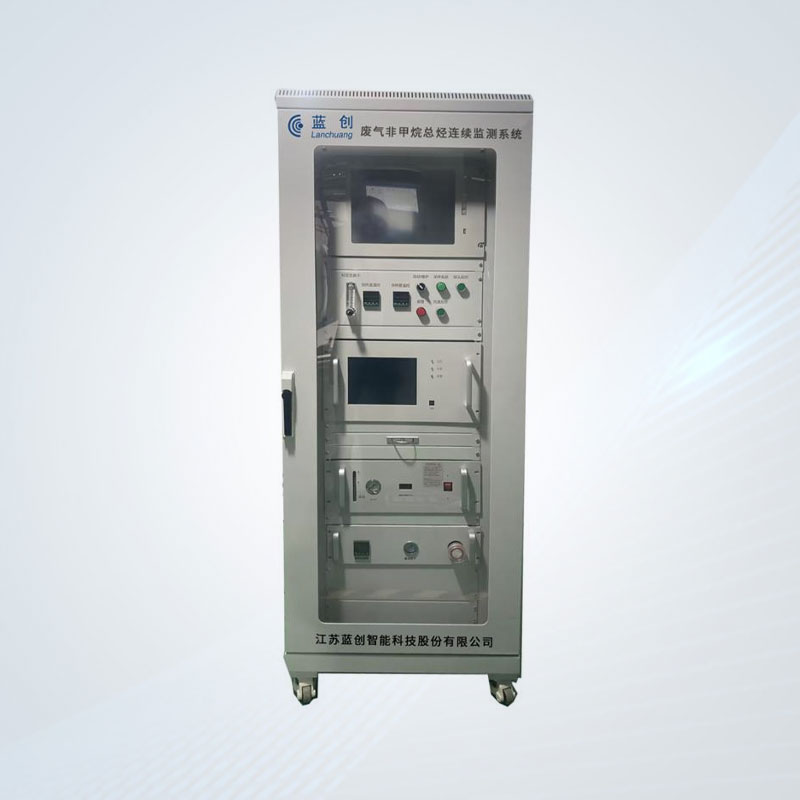
CEMS is the core technology for online monitoring of atmospheric pollutant emissions from industrial sources (e.g., power plants, steel mills, chemical plants). It realizes real-time, continuous monitoring of pollutant concentrations and emission volumes, and transmits data to environmental management departments in real time. The working principle is as follows:
- Sampling System: Collects flue gas samples from industrial chimneys or exhaust pipes, and performs pretreatment (filtering, drying, dehumidification) to remove impurities and moisture that may interfere with detection.
- Analysis System: Uses different detection principles to quantify pollutants. For example, SO₂ and NOₓ are detected by ultraviolet-visible absorption spectroscopy or infrared absorption spectroscopy; particulate matter is detected by light scattering method or β-ray absorption method; VOCs are detected by gas chromatography or mass spectrometry.
- Data Processing and Transmission System: Converts the detected signals into pollutant concentration data, calculates emission volumes based on flue gas flow rate, and transmits the data to the environmental monitoring platform through wireless or wired networks, ensuring transparency and real-time supervision.
Advantages of CEMS: High monitoring accuracy, continuous operation, and automatic data recording and transmission; Disadvantages: High equipment investment and maintenance costs, requiring regular calibration to ensure data reliability.
1.2 Offline Sampling and Laboratory Analysis
This technology is mainly used for regular monitoring of atmospheric pollutants, emergency monitoring, and verification of online monitoring data. The working process includes sampling, sample preservation, laboratory analysis, and data reporting. Common sampling methods include filter membrane sampling (for particulate matter), absorption liquid sampling (for SO₂, NOₓ), and solid-phase adsorption sampling (for VOCs). After sampling, the samples are sent to the laboratory for quantitative analysis using precision instruments such as gas chromatography (GC), high-performance liquid chromatography (HPLC), and atomic absorption spectroscopy (AAS).
Advantages: High detection accuracy, wide range of detectable pollutants, and low equipment investment; Disadvantages: Long detection cycle, high labor cost, and inability to realize real-time monitoring.
2. Water Pollutant Emission Monitoring Technologies
Water pollutant emission monitoring targets pollutants discharged into surface water, groundwater, and domestic sewage, such as chemical oxygen demand (COD), biochemical oxygen demand (BOD), ammonia nitrogen (NH₃-N), total phosphorus (TP), total nitrogen (TN), heavy metals, and organic pollutants. The main technologies include online monitoring and offline laboratory monitoring.
2.1 Water Quality Online Monitoring System (WQMS)
WQMS is widely used in sewage treatment plants, industrial enterprises (e.g., chemical, pharmaceutical, printing and dyeing), and environmental monitoring stations, realizing real-time monitoring of key water quality indicators. Its working principle is similar to CEMS, including sampling, pretreatment, detection, and data transmission.
- Pretreatment System: Filters the collected water samples to remove suspended solids, and adjusts the pH value to ensure the stability of the detection environment.
- Detection System: Uses chemical colorimetry, electrochemical method, and optical method to detect different indicators. For example, COD is detected by potassium dichromate oxidation colorimetry; ammonia nitrogen is detected by Nessler’s reagent colorimetry; heavy metals (e.g., lead, cadmium, mercury) are detected by electrochemical method or atomic fluorescence spectroscopy.
- Data Management System: Stores and analyzes monitoring data, sets alarm thresholds, and sends alarm signals when pollutant concentrations exceed the standard, facilitating timely treatment.
2.2 Offline Laboratory Monitoring
This is a traditional and reliable water pollutant monitoring method, suitable for detailed analysis of water samples and detection of low-concentration pollutants. After collecting water samples on site (using sampling bottles, samplers), the samples are preserved (e.g., adding preservatives, refrigerating) and sent to the laboratory for analysis. Common laboratory methods include titration, colorimetry, chromatography, and mass spectrometry. For example, BOD is measured by the dilution and inoculation method; organic pollutants are analyzed by gas chromatography-mass spectrometry (GC-MS).
3. Soil Pollutant Emission Monitoring Technologies
Soil pollutant emission monitoring mainly targets pollutants discharged into the soil from industrial waste, agricultural activities, and urban garbage, such as heavy metals, polycyclic aromatic hydrocarbons (PAHs), pesticides, and fertilizers. Due to the complexity of soil composition, soil monitoring is more cumbersome than atmospheric and water monitoring, and the main technologies include on-site rapid detection and laboratory analysis.
3.1 On-Site Rapid Detection Technology
This technology is suitable for large-scale soil investigation and emergency monitoring, enabling rapid screening of soil pollutants. Common methods include portable X-ray fluorescence spectroscopy (XRF) for heavy metal detection, and portable gas chromatography for volatile organic pollutant detection. The working principle is to use the interaction between radiation or light and soil samples to quickly determine the type and concentration of pollutants without complex sample pretreatment.
3.2 Laboratory Analysis Technology
Laboratory analysis is the standard method for soil pollutant monitoring, ensuring high detection accuracy. The process includes soil sampling, sample preparation (drying, grinding, sieving, extraction), and laboratory detection. For example, heavy metals in soil are extracted by acid digestion and detected by atomic absorption spectroscopy or inductively coupled plasma mass spectrometry (ICP-MS); organic pollutants are extracted by solvent extraction or solid-phase extraction and detected by GC-MS.
4. Remote Sensing Monitoring Technology
Remote sensing monitoring technology uses satellites, aircraft, or ground-based remote sensing equipment to monitor pollutant emissions on a large scale, realizing non-contact, rapid, and comprehensive monitoring. It is widely used in regional atmospheric pollution monitoring, water pollution investigation, and large-scale soil pollution screening.
- Atmospheric Remote Sensing Monitoring: Uses satellite remote sensing to detect the concentration and distribution of atmospheric pollutants (e.g., PM₂.₅, SO₂, NOₓ, VOCs) on a regional or global scale, helping to identify pollution sources and track the spread of pollution.
- Water Remote Sensing Monitoring: Identifies water pollution areas (e.g., algal blooms, oil spills, sewage discharges) by analyzing the spectral characteristics of water bodies, and monitors the scope and severity of pollution.
- Soil Remote Sensing Monitoring: Uses hyperspectral remote sensing technology to detect the content of heavy metals and organic pollutants in soil, realizing large-scale soil pollution investigation and evaluation.
Advantages: Large monitoring scope, fast speed, non-contact, and no damage to the monitored object; Disadvantages: Low detection accuracy for low-concentration pollutants, high equipment investment, and reliance on professional data interpretation.
III. Core Role of Pollutant Emission Monitoring Technologies in Environmental Protection
Pollutant emission monitoring technologies are the core support of environmental protection work, penetrating every link of environmental management, emission control, and ecological restoration. Their core role is reflected in the following aspects:
1. Providing Data Support for Environmental Policy Formulation
Scientific environmental policies (e.g., emission standards, emission reduction targets, environmental impact assessment) must be based on accurate pollutant emission data. Pollutant emission monitoring technologies collect and sort out data on pollutant types, concentrations, emission volumes, and spatial distribution from different sources, helping environmental management departments grasp the current situation of environmental pollution, identify key pollution areas and sources, and formulate targeted environmental policies and emission reduction plans. For example, based on the monitoring data of PM₂.₅ and NOₓ, governments can formulate motor vehicle emission standards and industrial flue gas treatment requirements, and determine reasonable emission reduction targets.
2. Ensuring the Effective Implementation of Emission Control Measures
Pollutant emission monitoring technologies are an important means to supervise the implementation of emission control measures by industrial enterprises and other pollution sources. Through online continuous monitoring and regular offline inspection, environmental management departments can timely find enterprises that exceed emission standards, urge them to rectify, and punish illegal emissions. At the same time, enterprises can also use monitoring data to optimize production processes, improve pollution control equipment, and ensure that their emissions meet national and local standards. For example, CEMS installed in industrial chimneys can monitor flue gas emissions in real time, and once pollutants exceed the standard, the system will send an alarm, prompting enterprises to adjust the operation of desulfurization, denitrification, and dust removal equipment.
3. Realizing Pollution Source Tracing and Emergency Response
In the event of environmental pollution accidents (e.g., chemical leakage, oil spills, sudden air pollution), pollutant emission monitoring technologies can quickly trace the source of pollution, determine the type and concentration of pollutants, and evaluate the scope and severity of pollution, providing technical support for emergency disposal. For example, in the event of a sudden VOCs leakage accident, portable gas chromatography can quickly detect the concentration and composition of VOCs, and remote sensing monitoring can track the spread direction of pollutants, helping emergency teams take targeted disposal measures (e.g., isolation, absorption, and purification) to minimize environmental damage.
4. Promoting Green Industrial Transformation and Upgrading
Pollutant emission monitoring technologies can promote industrial enterprises to achieve green transformation and upgrading by improving the transparency of pollutant emissions and increasing the cost of illegal emissions. Enterprises need to continuously optimize their production processes, adopt clean production technologies, and upgrade pollution control equipment to reduce pollutant emissions and meet monitoring standards. At the same time, monitoring data can also help enterprises identify energy-saving and emission-reduction potential, reduce production costs, and improve market competitiveness. For example, through monitoring COD and ammonia nitrogen emissions, sewage treatment plants can optimize the treatment process, reduce energy consumption and chemical dosage, and achieve energy conservation and emission reduction.
5. Evaluating the Effect of Environmental Governance and Ecological Restoration
Pollutant emission monitoring technologies are used to evaluate the effect of environmental governance and ecological restoration projects. By monitoring the changes in pollutant concentrations and emission volumes before and after the implementation of governance measures, environmental management departments can judge whether the governance effect meets the expected goals, and adjust the governance plan in a timely manner. For example, after the implementation of a river pollution control project, water quality online monitoring data can be used to evaluate the improvement of water quality indicators (e.g., COD, ammonia nitrogen), and determine whether the river has been restored to the standard.
6. Safeguarding Human Health and Ecological Balance
The ultimate goal of pollutant emission monitoring is to protect human health and ecological balance. By controlling pollutant emissions through accurate monitoring, the content of harmful substances in the environment (air, water, soil) can be reduced, reducing the risk of diseases caused by environmental pollution (e.g., respiratory diseases, heavy metal poisoning). At the same time, monitoring can also protect the living environment of animals and plants, maintain ecological balance, and promote the sustainable development of the ecological environment.
IV. Current Challenges and Future Development Trends
Although pollutant emission monitoring technologies have made great progress and played an important role in environmental protection, they still face some challenges: low detection accuracy of low-concentration pollutants, high equipment investment and maintenance costs, inconsistent monitoring standards in different regions, and insufficient integration of multi-medium monitoring data. In the future, with the development of science and technology, pollutant emission monitoring technologies will develop in the following directions:
- Intelligentization: Integrate Internet of Things (IoT), artificial intelligence (AI), and big data technologies to realize intelligent sampling, detection, data analysis, and early warning. For example, AI algorithms can automatically identify abnormal monitoring data and predict pollution trends, improving the efficiency of environmental management.
- Miniaturization and Portability: Develop portable, miniaturized monitoring equipment with low cost and high accuracy, facilitating on-site rapid detection and emergency monitoring, and expanding the scope of monitoring.
- Multi-Medium and Multi-Indicator Integration: Integrate atmospheric, water, and soil monitoring technologies to realize simultaneous monitoring of multiple media and multiple pollutants, improving the comprehensiveness and systematicness of monitoring data.
- High Sensitivity and Selectivity: Develop high-sensitivity detection technologies to improve the detection accuracy of low-concentration pollutants, meeting the increasingly strict environmental protection requirements.
- Green and Low-Carbon: Optimize the design of monitoring equipment and detection methods, reduce energy consumption and environmental pollution caused by monitoring activities, and realize green monitoring.
V. Conclusion
Pollutant emission monitoring technologies are an indispensable part of environmental protection work, providing accurate and reliable data support for environmental management, emission control, and ecological restoration. From atmospheric, water, and soil monitoring to remote sensing monitoring, various monitoring technologies complement each other, forming a comprehensive pollutant emission monitoring system, which plays a core role in formulating environmental policies, supervising emission control, tracing pollution sources, promoting green development, and safeguarding human health and ecological balance.
Facing the increasingly severe environmental challenges and higher environmental protection requirements, pollutant emission monitoring technologies will continue to develop in the direction of intelligence, miniaturization, integration, and high sensitivity. It is necessary for environmental management departments, industrial enterprises, and scientific research institutions to strengthen cooperation, increase investment in scientific research and development, promote the innovation and application of monitoring technologies, and continuously improve the level of environmental monitoring and management. Only in this way can we effectively control pollutant emissions, improve environmental quality, and promote the sustainable development of the ecological environment.