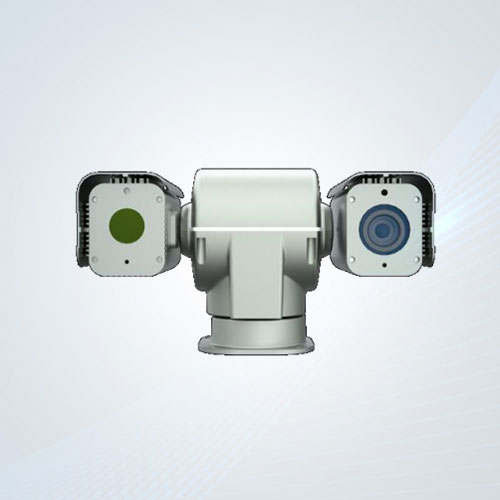
In security surveillance systems—spanning commercial facilities, industrial sites, public infrastructure, and critical infrastructure—PTZ (Pan-Tilt-Zoom) cameras are lauded for their dynamic coverage capabilities and remote operability. Designed to pan (horizontal rotation), tilt (vertical adjustment), and zoom (optical/digital magnification), these cameras offer flexibility in monitoring large or complex areas with fewer devices. However, their advanced mechanical and electronic design introduces inherent limitations that can impact reliability, cost-effectiveness, and performance in specific use cases.
This article provides a technical analysis of
PTZ cameras’ key disadvantages, emphasizing engineering constraints, operational tradeoffs, and industry-specific challenges—equipping security engineers, facility managers, and procurement teams to make data-driven decisions aligned with surveillance requirements.
1. Higher Total Cost of Ownership (TCO)
PTZ cameras carry a significantly higher TCO compared to fixed dome/bullet cameras, driven by three core cost drivers:
- Initial Procurement: PTZ cameras cost 2–5x more than fixed cameras (e.g., a commercial-grade PTZ camera: $800–$3,000 vs. a fixed HD camera: $150–$500). Advanced models with optical zoom (10–30x), 4K resolution, or auto-tracking features can exceed $5,000.
- Installation & Configuration: PTZ cameras require precision mounting (to support motorized movements) and complex setup (network integration, presets programming, joystick control calibration). Professional installation costs are 30–60% higher than fixed cameras, often requiring certified technicians.
- Maintenance & Replacement: Mechanical components (motors, gears, bearings) degrade over time, leading to higher maintenance costs. Annual maintenance expenses (cleaning, lubrication, calibration) are 2–3x those of fixed cameras, and component replacements (e.g., pan-tilt motors) can cost 40–60% of the camera’s initial price.
For budget-constrained organizations or large-scale deployments (e.g., retail chains with 50+ locations), the TCO gap can be prohibitive.
2. Mechanical Reliability & Downtime Risks
PTZ cameras’ motorized functionality is their greatest strength but also their primary vulnerability. Unlike fixed cameras (with no moving parts), PTZ models face significant mechanical failure risks:
- Component Wear: Continuous pan/tilt movements cause gear misalignment, bearing degradation, and motor burnout. The Mean Time Between Failures (MTBF) for PTZ cameras is typically 30,000–50,000 hours, compared to 80,000–100,000 hours for fixed cameras.
- Environmental Stress: Extreme temperatures (-40°C to 60°C), high humidity (>95% RH), dust, or vibration (e.g., industrial facilities, construction sites) accelerate mechanical wear. Even IP66/IP67-rated enclosures cannot fully prevent particulate ingress or thermal stress on motors.
- Calibration Drift: Over time, pan/tilt movements deviate from programmed presets, requiring regular recalibration to maintain coverage accuracy. Uncalibrated cameras may fail to focus on critical areas (e.g., entry points, equipment), creating security gaps.
Mechanical failures result in unplanned downtime—critical for 24/7 surveillance environments (e.g., data centers, airports)—and require immediate replacement or repair to avoid security lapses.
3. Limited Simultaneous Coverage
PTZ cameras’ dynamic coverage is a double-edged sword: while they can monitor large areas via sequential scanning, they cannot track multiple events simultaneously. Key limitations include:
- Single-Point Focus: At any given time, a PTZ camera can only pan, tilt, or zoom to one location. If an incident occurs outside the camera’s current field of view (FOV), it will be missed unless an operator or auto-tracking feature redirects it—introducing latency (1–3 seconds for motor response).
- Preset Scanning Limitations: Programmable presets (e.g., rotating between entry points, parking lots) create predictable coverage patterns, which can be exploited by intruders. Additionally, preset scanning fails to account for unexpected events (e.g., a break-in in a non-preset area).
- Zoom vs. Context Tradeoff: Optical zoom (10–30x) allows close-up detail capture (e.g., license plates, facial features) but narrows the FOV to a few square meters. Over-reliance on zoom can result in missed activity in the broader scene, as the camera cannot maintain both detail and wide coverage.
In high-risk environments requiring full-area surveillance (e.g., correctional facilities, industrial yards), PTZ cameras must be paired with fixed cameras—increasing system complexity and cost.
4. Operational Dependencies & Human Error
PTZ cameras’ effectiveness is heavily dependent on human operators or automated software, introducing significant limitations:
- Operator Fatigue: In 24/7 monitoring centers, operators cannot continuously track multiple PTZ cameras—leading to missed events. Studies show that operator attention declines by 50% after 30 minutes of monitoring, increasing the risk of oversight.
- Auto-Tracking Limitations: Advanced PTZ cameras offer motion-based or object-based auto-tracking, but these features are prone to false triggers (e.g., animals, moving vegetation) or failure in complex scenes (e.g., crowded areas, low light). Auto-tracking also struggles to maintain focus on fast-moving objects (e.g., vehicles, running intruders).
- Training Requirements: Operating PTZ cameras effectively requires training in joystick control, preset programming, and crisis response. Untrained operators may misdirect the camera during critical events, delaying intervention.
In environments without dedicated monitoring staff (e.g., small businesses, remote sites), PTZ cameras revert to basic preset scanning—negating their dynamic advantages.
5. Increased Resource Consumption
PTZ cameras demand more power and network bandwidth than fixed cameras, straining infrastructure:
- Power Requirements: Motorized movements and high-resolution sensors (4K, HDR) increase power consumption. PTZ cameras typically require 12–24V DC (10–30W) or PoE+ (Power over Ethernet, 30W), compared to 5–15W for fixed cameras. In large deployments, this increases energy costs and may require upgraded power supplies (e.g., PoE+ switches, backup generators).
- Bandwidth Usage: Real-time pan/tilt/zoom commands, combined with high-resolution video streams (4K: 8–15 Mbps per camera), consume 2–5x more bandwidth than fixed cameras (HD: 2–4 Mbps). This strains network resources, leading to latency, frame loss, or the need for expensive upgrades (e.g., 10Gbps switches, dedicated surveillance networks).
For organizations with legacy IT infrastructure or limited bandwidth (e.g., remote sites with satellite internet), PTZ cameras can degrade overall system performance.
6. Environmental Vulnerabilities
PTZ cameras are more susceptible to environmental damage than fixed cameras, due to their moving parts and complex enclosures:
- Extreme Weather: Heavy rain, snow, or ice can jam pan/tilt mechanisms or damage external lenses. High winds may cause vibration, blurring footage during zoom.
- Corrosion & Fouling: Coastal environments (salt spray) or industrial sites (chemical fumes) can corrode metal components (gears, motors) and fog lenses—reducing image clarity and mechanical functionality.
- Vandalism Risk: The camera’s moving parts and larger size make it a target for vandalism (e.g., physical tampering, lens damage). While protective housings (e.g., impact-resistant polycarbonate) can mitigate risks, they add cost and may restrict movement.
In harsh environments, fixed cameras with ruggedized enclosures (e.g., explosion-proof, weatherproof) often offer better long-term reliability.
7. System Integration Complexity
PTZ cameras require seamless integration with security systems (VMS, access control, alarms), but compatibility challenges are common:
- Protocol Limitations: While most PTZ cameras support ONVIF (Open Network Video Interface Forum) or Pelco-D/P protocols, version mismatches (e.g., ONVIF Profile S vs. G) can cause communication failures with VMS platforms (e.g., Milestone, Genetec).
- API Integration: Custom integrations (e.g., linking PTZ movements to alarm triggers) require advanced API (Application Programming Interface) support, which may be limited in budget PTZ models.
- Control System Compatibility: Joysticks, keyboards, or mobile apps may not support all PTZ features (e.g., preset groups, auto-tracking) across different camera brands, leading to fragmented control.
Integration issues can delay deployment, increase setup costs, and limit the camera’s functionality within the broader security ecosystem.
8. Digital Zoom Quality Degradation
While optical zoom (using lens movement) preserves image quality, many PTZ cameras rely on digital zoom (cropping and enlarging pixels) for extended magnification. Digital zoom:
- Reduces resolution and introduces pixelation (e.g., 4K digital zoom to 30x results in ~720p effective resolution).
- Degrades low-light performance, as cropped images have fewer pixels to capture light.
- Fails to provide actionable detail (e.g., facial recognition, license plate reading) beyond 2–3x digital magnification.
Organizations requiring high-detail zoom (e.g., law enforcement, critical infrastructure) must invest in PTZ cameras with 20x+ optical zoom—further increasing costs.