In industrial processes ranging from wastewater treatment to chemical manufacturing, ammonia (NH₃) serves as a critical process intermediate, refrigerant, or byproduct—yet its uncontrolled release poses severe risks to environmental compliance, worker safety, and operational efficiency. Exceeding regulatory thresholds (e.g., OSHA’s Permissible Exposure Limit (PEL) of 50 ppm for 8-hour TWA, EPA’s 1.2 ppm 1-hour ambient air standard) can result in fines exceeding $100,000 per violation, while process deviations linked to unmonitored ammonia levels may cause equipment corrosion, product quality defects, or production shutdowns.
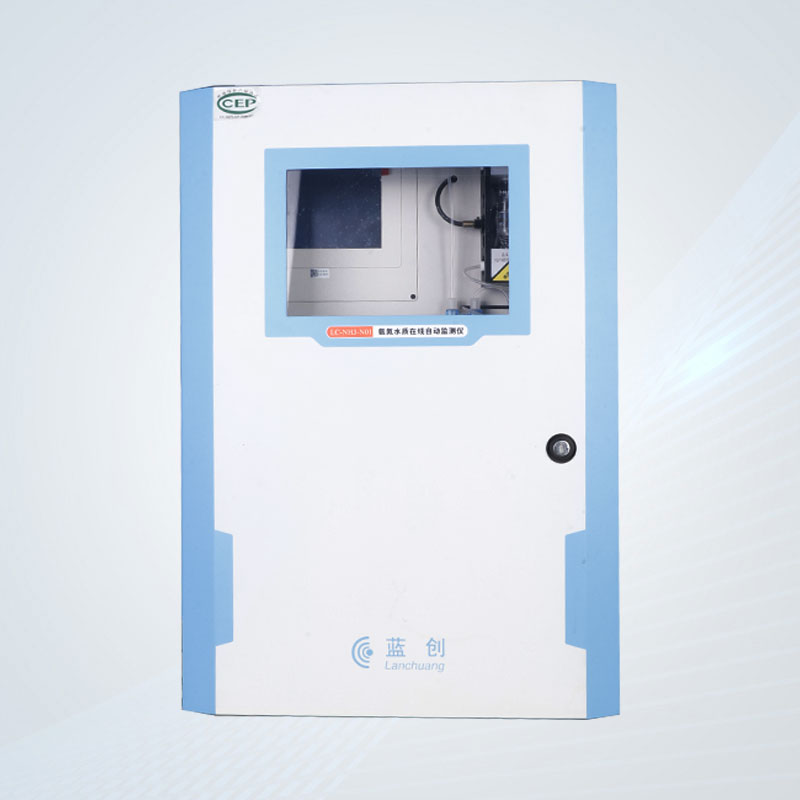
Online ammonia analyzers address these challenges by delivering continuous, real-time data on NH₃ concentrations in gas or liquid streams. Unlike manual sampling and laboratory analysis— which suffer from latency, human error, and limited sampling frequency—these industrial-grade instruments enable proactive process control, regulatory compliance, and resource optimization. This article explores the technical mechanisms, core efficiency drivers, industry-specific applications, and selection criteria of online ammonia analyzers, highlighting their transformative impact on industrial operations.
The Industrial Significance of Ammonia Monitoring
Ammonia is a highly reactive, water-soluble gas (NH₃) with a pungent odor, widely used in:
- Chemical Manufacturing: Synthesis of fertilizers (urea, ammonium nitrate), pharmaceuticals, and refrigerants (R717).
- Wastewater Treatment: Biological nutrient removal (BNR) processes (nitrification/denitrification) to reduce nitrogen loads in effluent.
- Agriculture: Livestock waste management and ammonia-based fertilizer production.
- Refrigeration: Industrial cooling systems (ammonia’s high latent heat makes it energy-efficient but toxic if leaked).
Uncontrolled ammonia levels lead to cascading operational and compliance risks:
- Environmental Harm: Ammonia runoff causes eutrophication in water bodies; atmospheric NH₃ reacts with sulfur oxides to form particulate matter (PM₂.₅), violating air quality standards (EU Air Quality Directive, EPA Clean Air Act).
- Worker Safety: Acute exposure to >300 ppm causes respiratory distress; chronic exposure damages mucous membranes and eyes.
- Process Disruption: In wastewater treatment, excess ammonia inhibits nitrifying bacteria, reducing treatment efficiency; in chemical production, NH₃ leaks contaminate batches and corrode equipment (e.g., stainless steel, copper alloys).
Accurate, continuous monitoring is therefore not just a regulatory mandate but a cornerstone of efficient, safe industrial operations.
Technical Principles of Online Ammonia Analyzers
Online ammonia analyzers are engineered for continuous, in-situ or extractive monitoring of NH₃ in gas (stack emissions, ambient air) or liquid (wastewater, process streams) matrices. They leverage specialized detection technologies tailored to matrix type, concentration range, and industrial environment:
1. Ion-Selective Electrodes (ISE)
- Technology: Potentiometric sensors with a membrane selective to ammonium ions (NH₄⁺, formed when NH₃ dissolves in aqueous solutions). The membrane generates a voltage proportional to NH₄⁺ concentration, calibrated against NIST-traceable standards.
- Key Specs: Detection range: 0.01–10,000 mg/L NH₃-N; response time (T90): <2 minutes; operating pH: 6.5–8.5.
- Applications: Wastewater treatment (effluent/process streams), aqueous process monitoring (chemical manufacturing).
- Advantages: Low cost, resistance to turbidity, suitable for high-salinity matrices.
2. Colorimetric Analysis (Nesslerization or Indophenol Method)
- Technology: Reacts NH₃ with a chemical reagent (e.g., Nessler’s reagent, salicylate-hypochlorite) to form a colored complex. The absorbance of the complex is measured via photometry, correlated to NH₃ concentration.
- Key Specs: Detection range: 0.02–50 mg/L NH₃-N; accuracy: ±2% full scale (FS); auto-calibration capability.
- Applications: Drinking water treatment, low-concentration wastewater monitoring.
- Advantages: High selectivity (minimizes interference from other ions), proven reliability in municipal applications.
3. Spectrophotometry (UV-Vis/NIR)
- Technology: Leverages NH₃’s unique absorption spectrum (e.g., 1510 nm near-infrared, 200–220 nm ultraviolet) to quantify concentration. Extractive systems sample gas/liquid streams, while in-situ probes measure directly in pipes or stacks.
- Key Specs: Detection range: 0.1 ppm–5% NH₃ (gas); 0.1–1000 mg/L (liquid); response time: <1 second (in-situ); IP67-rated for harsh environments.
- Applications: Stack emissions monitoring, chemical process reactors, refrigeration systems.
- Advantages: No reagent consumption, low maintenance, suitable for high-temperature/pressure environments.
4. Photoacoustic Spectroscopy (PAS)
- Technology: NH₃ molecules absorb pulsed laser light, generating acoustic waves proportional to concentration. Ideal for trace-level gas monitoring.
- Key Specs: Detection range: 1 ppb–100 ppm NH₃; selectivity: >10,000:1 (vs. CO₂, H₂O, VOCs); operating temperature: -40°C to 60°C.
- Applications: Ambient air monitoring, semiconductor manufacturing (ultra-low NH₃ detection).
- Advantages: High sensitivity, no cross-interference, minimal drift.
All industrial-grade analyzers integrate data logging, alarm triggers (visual/audio/remote), and communication protocols (Modbus, HART, OPC UA) for seamless integration with Distributed Control Systems (DCS) or Building Management Systems (BMS).
Core Efficiency Drivers of Online Ammonia Analyzers
Online ammonia analyzers deliver measurable efficiency gains across four critical industrial dimensions:
1. Real-Time Process Optimization
Manual sampling (e.g., grab samples sent to labs) introduces latency of hours to days, leading to reactive process adjustments. Online analyzers provide sub-minute data, enabling:
- Precision Process Control: In wastewater treatment, real-time NH₃ data optimizes the dosage of oxygen and chemicals (e.g., methanol) in nitrification/denitrification tanks, reducing energy consumption by 15–20% and chemical costs by 10–15% (Water Environment Federation, 2023).
- Yield Improvement: In fertilizer manufacturing, continuous NH₃ monitoring in reaction vessels ensures optimal conversion rates, reducing raw material waste by 5–8%.
- Minimized Downtime: Early detection of NH₃ leaks in refrigeration systems triggers automatic shutdowns, preventing equipment damage and reducing unplanned downtime by 30–40% (International Institute of Ammonia Refrigeration).
2. Regulatory Compliance & Risk Mitigation
Non-compliance with environmental and occupational safety standards results in costly fines, legal liabilities, and reputational damage. Online analyzers:
- Automate Compliance Reporting: Generate audit-ready data logs (ISO 14001, EPA Part 75) with timestamped measurements, eliminating manual record-keeping errors and reducing compliance administrative time by 90%.
- Proactive Alerting: Trigger alarms when NH₃ levels approach thresholds (e.g., 80% of PEL), allowing operators to implement corrective actions (e.g., increase ventilation, adjust process parameters) before violations occur.
- Worker Safety: Real-time gas monitoring in confined spaces (e.g., chemical storage tanks, wastewater basins) reduces exposure risk, lowering workers’ compensation claims by 25–30% (OSHA Workplace Safety Report, 2022).
3. Operational Cost Reduction
Traditional monitoring relies on labor-intensive sampling, laboratory analysis, and reactive maintenance. Online analyzers cut costs by:
- Eliminating Manual Sampling: A single analyzer replaces 2–3 daily manual samples, reducing labor costs by $10,000–$30,000 annually per site.
- Reducing Laboratory Fees: Avoids costs of $50–$100 per sample (typical for GC/MS analysis), translating to savings of $18,000–$36,000 annually for a mid-sized facility.
- Extending Equipment Lifespan: Early detection of corrosive NH₃ leaks protects valves, pumps, and pipelines, extending equipment lifespan by 10–15% and reducing replacement costs.
4. Resource Efficiency & Sustainability
Online ammonia analyzers support sustainability goals by optimizing resource use:
- Energy Savings: In wastewater treatment, precise NH₃ monitoring reduces aeration energy consumption (a major operational cost) by matching oxygen supply to biological demand.
- Water Conservation: Prevents over-dosing of chemicals in water treatment, reducing sludge production and water usage for backwashing.
- Emissions Reduction: In industrial stacks, real-time NH₃ data optimizes scrubber performance, reducing NH₃ emissions by 40–60% and lowering carbon footprint.
Industry-Specific Applications
Online ammonia analyzers are tailored to address unique challenges across key industries:
1. Wastewater Treatment
- Application: Monitor NH₃-N in influent, aeration tanks, and effluent to optimize BNR processes.
- Key Requirements: Resistance to high turbidity, pH extremes (5–10), and chemical interference (e.g., sulfide, nitrite).
- Analyzer Type: ISE or colorimetric analyzers (aqueous), in-situ probes with self-cleaning membranes.
- Efficiency Gain: Reduces chemical dosage by 12–18%, cuts aeration energy use by 15%, and ensures effluent meets EPA’s 10 mg/L NH₃-N limit.
2. Chemical Manufacturing
- Application: Monitor NH₃ in reaction streams, storage tanks, and stack emissions (e.g., urea production, pharmaceutical synthesis).
- Key Requirements: High temperature/pressure tolerance (-20°C to 150°C, up to 10 bar), fast response time (<1 second), and explosion-proof certification (ATEX/IECEx).
- Analyzer Type: UV-Vis spectrophotometry (in-situ), PAS (trace-level gas).
- Efficiency Gain: Improves product yield by 5–8%, reduces emissions violations by 95%, and minimizes batch losses.
3. Agriculture & Fertilizer Production
- Application: Track NH₃ from fertilizer plants, livestock waste lagoons, and application equipment.
- Key Requirements: Wide detection range (0.1 ppm–100 ppm), weatherproof design (IP67), and long-term stability.
- Analyzer Type: PAS or NIR spectrophotometry (gas).
- Efficiency Gain: Reduces fertilizer loss by 10–15%, complies with EU Nitrates Directive, and minimizes odor complaints.
4. Industrial Refrigeration
- Application: Detect NH₃ leaks in cooling systems (e.g., food processing, cold storage).
- Key Requirements: Fast response time (<5 seconds), low detection limit (1 ppm), and integration with HVAC/BMS.
- Analyzer Type: Electrochemical or PAS gas analyzers.
- Efficiency Gain: Prevents product spoilage (valued at $50,000–$100,000 per incident), reduces energy waste from leak-induced inefficiencies.
Critical Selection Criteria for Industrial-Grade Analyzers
To maximize efficiency gains, select an online ammonia analyzer aligned with your operational needs using these technical parameters:
| Parameter | Industrial-Grade Requirements | Rationale |
|-----------|--------------------------------|-----------|
| Detection Range | Gas: 0.1 ppb–5% NH₃; Liquid: 0.01–10,000 mg/L NH₃-N | Covers trace-level leaks to high-concentration process streams. |
| Accuracy & Precision | ±1% FS (gas); ±2% FS (liquid); RSD <3% | Ensures compliance with strict regulatory limits. |
| Response Time (T90) | <2 seconds (gas); <5 minutes (liquid) | Enables rapid corrective actions. |
| Environmental Durability | IP65+ rating; operating temperature: -40°C to 85°C | Withstands harsh industrial environments (e.g., humidity, dust, temperature extremes). |
| Calibration & Maintenance | Auto-calibration (weekly/monthly); sensor lifespan >2 years | Reduces downtime and maintenance costs. |
| Connectivity | Modbus RTU/TCP, HART 7, OPC UA | Integrates with DCS/BMS for centralized control. |
| Certifications | ISO 9001, EPA-approved, ATEX/IECEx (hazardous areas) | Ensures regulatory compliance and safety. |
| Matrix Compatibility | Resistant to interference (e.g., H₂O, CO₂, sulfide) | Avoids false readings in complex industrial streams. |
Advanced Technology Trends Enhancing Efficiency
Modern online ammonia analyzers integrate Industry 4.0 capabilities to further boost efficiency:
- IIoT Integration: Cloud-based data platforms (e.g., Endress+Hauser Liquiline Web Server, Emerson Rosemount Analytics) enable remote monitoring, trend analysis, and predictive maintenance (e.g., alerting when sensor calibration is due).
- Multivariate Sensing: Dual-sensor analyzers (e.g., NH₃ + CO₂ + O₂) provide comprehensive process insights, reducing the need for multiple instruments.
- Self-Cleaning Probes: Ultrasonic or wiper-based self-cleaning mechanisms prevent fouling in wastewater or dusty environments, reducing maintenance frequency by 50%.
- AI-Powered Analytics: Machine learning algorithms identify abnormal NH₃ trends (e.g., gradual leaks) and predict process deviations, enabling proactive optimization.