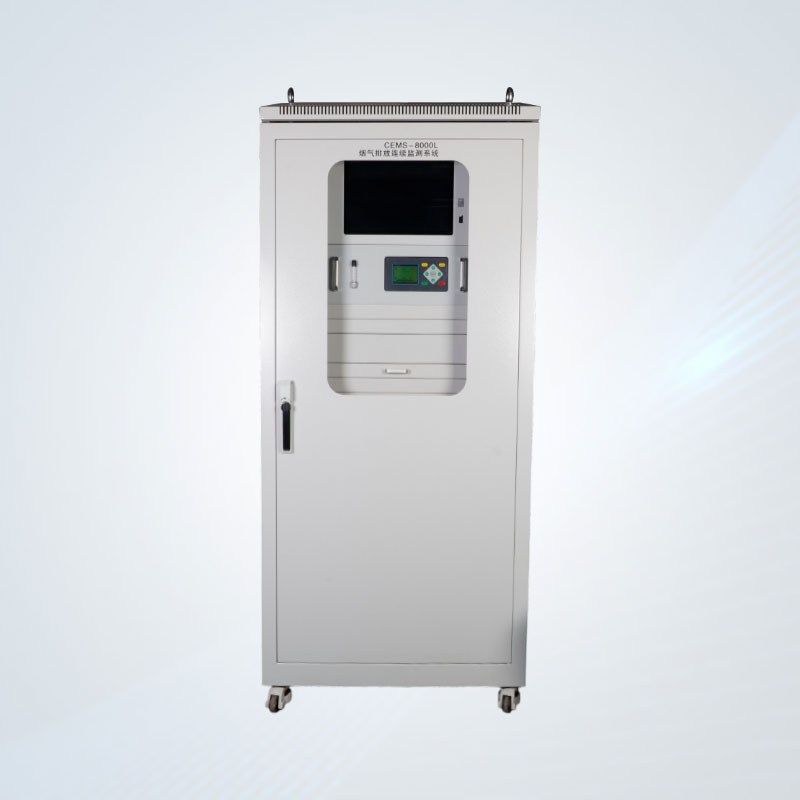
Air pollution mitigation has become a globally mandated priority, with industrial emissions regulation relying on robust, data-driven monitoring frameworks. Continuous Emission Monitoring Systems (CEMS) are the gold standard for automated, legally defensible quantification of industrial pollutants, enabling compliance with stringent regulatory frameworks (e.g., EPA 40 CFR Part 60/75, EU EN 15267, ISO 14064) and proactive environmental stewardship. Unlike periodic manual sampling, CEMS delivers real-time, high-precision data on pollutant concentrations, flow rates, and mass emissions—critical for validating compliance, optimizing industrial processes, and protecting public health. This article dissects the technical architecture, operational mechanics, regulatory alignment, and functional value of CEMS, providing a rigorous, industry-compliant overview of how these systems operate.
1. Core Definition & Regulatory Context
CEMS is formally defined as an integrated suite of hardware, software, and procedural protocols designed to continuously measure, record, and report the concentration and mass emission of regulated pollutants from stationary sources (e.g., power plant stacks, industrial boilers, chemical process vents). Key regulatory requirements mandate that CEMS data meet four pillars of data quality:
- Accuracy: ≤±5% relative error for gaseous pollutants, ≤±10% for particulate matter (PM).
- Precision: ≤±2% relative standard deviation (RSD) for continuous measurements.
- Completeness: ≥90% data availability annually (per EPA 40 CFR Part 75).
- Representativeness: Compliance with EPA Method 1 (sampling location selection) to ensure samples reflect true stack gas composition.
Regulated pollutants typically include sulfur dioxide (SO₂), nitrogen oxides (NOₓ), carbon dioxide (CO₂), carbon monoxide (CO), volatile organic compounds (VOCs), PM₂.₅/PM₁₀, and hazardous air pollutants (HAPs) such as mercury (Hg) and benzene.
2. Technical Components of CEMS: Integrated Subsystems
CEMS operates through five interconnected subsystems, each engineered to withstand harsh industrial environments (high temperature, corrosive gases, variable flow) while maintaining measurement integrity:
2.1 Sample Extraction Subsystem
- Sample Probe: Constructed from corrosion-resistant alloys (Inconel, Hastelloy) or stainless steel, installed per EPA Method 1 at a location with uniform gas flow (≥8 stack diameters downstream of bends/obstructions). Probes feature heated tips (120–150°C) to prevent condensation and filter elements (0.5 μm pore size) to remove particulate matter.
- Heated Sample Line: Insulated, temperature-controlled tubing (maintained at 120–180°C) to prevent condensation of VOCs and moisture, which would alter sample composition. Compatible with corrosive gases (e.g., SO₂, HCl) via PTFE or ceramic liners.
2.2 Sample Conditioning Subsystem
The critical intermediate stage that prepares stack gas for analysis by removing interferents:
- Particulate Filtration: High-efficiency filters (0.1 μm) to eliminate PM that could clog analyzers or cause sensor drift.
- Moisture Removal: Nafion membrane dryers or refrigerated condensers to reduce dew point to <5°C, preventing water vapor interference with optical analyzers.
- Pressure/Temperature Regulation: Pressure regulators (1–5 bar) and heat exchangers to stabilize sample conditions at analyzer operating parameters (20–25°C, 1 atm).
- Acid Gas Scrubbing (Optional): For high-sulfur or acidic streams, chemical scrubbers (e.g., sodium hydroxide cartridges) to neutralize H₂SO₄ or HCl, protecting analyzer components.
2.3 Data Acquisition & Handling System (DAS)
A specialized computing platform that ensures data integrity, validation, and reporting:
- Data Logging: Captures raw sensor outputs, calibrated concentrations, stack flow rates, and auxiliary parameters (temperature, pressure, O₂ content) at 1–5 second intervals.
- Validation Logic: Applies regulatory data quality rules (e.g., EPA 40 CFR Part 75 Data Validator Criteria) to flag invalid data (sensor drift, power outages, maintenance periods) and calculate "valid data percentage" (VDP).
- Mass Emission Calculation: Automates mass emission computations (kg/h or tons/year) using the formula:
\[
\text{Mass Emission} = \text{Pollutant Concentration} \times \text{Stack Gas Flow Rate} \times \text{Time} \times \text{Conversion Factors}
\]
- Reporting & Connectivity: Generates compliance reports (hourly/daily/monthly) aligned with regulatory formats (e.g., EPA e-GGRT, EU MRR); supports secure data transmission via MODBUS, OPC UA, or cloud-based IoT platforms (AWS IoT Core, Azure IoT).
2.4 Calibration & Quality Assurance (QA/QC) Subsystem
Critical for maintaining regulatory compliance and measurement accuracy:
- Automated Calibration: Daily zero calibration (using purified air) and span calibration (using NIST-traceable standard gases at 50–100% of regulatory limits) to correct sensor drift.
- Performance Audits: Quarterly/annual audits by accredited third parties using EPA Protocol 3 (gaseous pollutants) or Protocol 5 (PM) to verify accuracy (±2–5% of true value).
- System Checks: Continuous monitoring of analyzer status, sample flow rate, and conditioning system performance (e.g., filter pressure drop, dryer dew point) to trigger alarms for maintenance.
3. Operational Mechanism: Step-by-Step Workflow
CEMS operates through a closed-loop, automated workflow designed to ensure representative sampling, precise analysis, and valid data capture. Below is the technical breakdown of each stage:
Step 1: Representative Sample Extraction
The sample probe is installed at a EPA Method 1-compliant location (≥8 stack diameters downstream of bends, no flow disturbances) to extract a gas sample that reflects the bulk stack gas composition. Probe heating prevents condensation, while inline filters remove PM to protect downstream components. For large stacks, multiple probes may be used to ensure spatial representativeness.
Step 2: Sample Transport & Conditioning
The extracted sample travels through a heated sample line (120–180°C) to prevent VOC condensation and moisture absorption. Upon reaching the conditioning subsystem:
- Particulate matter is removed via 0.1 μm membrane filters.
- Moisture is reduced to a dew point <5°C using Nafion dryers (to avoid interference with optical analyzers).
- Pressure and temperature are stabilized to match analyzer operating conditions (20–25°C, 1 atm).
- Acidic or corrosive compounds are neutralized (if applicable) to prevent analyzer damage.
Step 3: Pollutant Analysis
The conditioned sample is directed to specialized analyzers, each optimized for target pollutants:
- NDIR analyzers measure CO₂/CO by detecting infrared absorption at specific wavelengths (4.2 μm for CO₂, 4.6 μm for CO).
- UV-DOAS analyzers quantify SO₂/NOₓ by measuring differential absorption of UV light at pollutant-specific wavelengths, correcting for cross-interference from background gases.
- TEOM/BAM analyzers determine PM mass by measuring oscillating frequency changes (TEOM) or beta particle attenuation (BAM).
- GC-FID/PID analyzers separate and quantify VOCs, with GC-FID providing compound-specific data for compliance with EPA Method 25A.
Step 4: Data Validation & Processing
The DAS collects raw data from analyzers and applies validation rules to:
- Reject data from periods of calibration, maintenance, or system malfunctions.
- Flag data outside pre-defined precision/accuracy thresholds.
- Calculate calibrated concentrations and mass emissions using stack flow rate (measured via EPA Method 2/2A pitot tubes or ultrasonic flow meters) and environmental parameters.
Step 5: Reporting & Alerting
Validated data is stored in a secure database and used to generate regulatory reports (e.g., monthly compliance summaries for EPA Title V permits). The DAS triggers real-time alerts (email, SMS, SCADA integration) if pollutant concentrations exceed regulatory limits, enabling rapid operational adjustments (e.g., adjusting combustion air-fuel ratio, activating pollution control devices).
Step 6: Routine QA/QC & Maintenance
To ensure long-term reliability:
- Daily zero/span calibration verifies analyzer performance.
- Quarterly performance audits validate accuracy against traceable standards.
- Routine maintenance includes filter replacement, dryer membrane cleaning, and sensor recalibration.
4. Core Functional Value of CEMS
CEMS delivers multifaceted value beyond regulatory compliance, serving as a strategic tool for industrial operations and environmental management:
4.1 Regulatory Compliance & Legal Defensibility
CEMS provides the only legally acceptable data for demonstrating adherence to emissions limits (e.g., EPA MACT standards, EU IED thresholds). Non-compliance can result in fines (up to $50,000/day under the U.S. Clean Air Act) or operational shutdowns, making CEMS an indispensable risk mitigation tool.
4.2 Public Health & Environmental Protection
Real-time monitoring enables rapid response to emission spikes (e.g., equipment malfunctions, process upsets), preventing acute exposure to toxic pollutants (e.g., H₂S, benzene) and mitigating long-term environmental impacts (eutrophication, acid rain).
4.3 Operational Efficiency & Cost Optimization
CEMS data supports process optimization by identifying inefficiencies:
- Adjusting combustion parameters (air-fuel ratio) to reduce NOₓ/SO₂ emissions and improve fuel efficiency (up to 5–10% fuel savings).
- Optimizing pollution control devices (e.g., scrubbers, catalytic converters) to minimize chemical/energy consumption.
- Predicting equipment failures (e.g., catalyst degradation) via emission trend analysis, reducing unplanned downtime.
4.4 Transparency & Stakeholder Accountability
CEMS data is increasingly used for sustainability reporting (e.g., GRI Standards, CDP Climate Change Questionnaire) and stakeholder communication, enhancing corporate reputation and investor confidence.
5. Industry Challenges & Mitigation Strategies
While CEMS delivers significant value, implementation and operation present technical and operational challenges—addressed through targeted strategies:
5.1 High Initial & Operational Costs
- Challenge: Upfront costs include hardware ($50,000–$200,000 per stack), installation, and regulatory certification; operational costs include calibration gases, maintenance, and skilled personnel.
- Mitigation: Modular CEMS designs reduce upfront investment for small-to-medium enterprises (SMEs); long-term savings from avoided fines, fuel efficiency gains, and reduced downtime offset costs.
5.2 Technical Complexity & Maintenance Requirements
- Challenge: CEMS requires specialized expertise for calibration, troubleshooting, and data validation.
- Mitigation: Partnering with accredited service providers for maintenance; investing in operator training programs aligned with EPA CEMS Operator Certification standards.
5.3 Data Management & Cybersecurity
- Challenge: CEMS generates terabytes of data annually, requiring robust storage and analysis systems; connected DAS platforms are vulnerable to cyber threats.
- Mitigation: Integrating cloud-based data management platforms (e.g., OSIsoft PI System) for real-time analytics; implementing cybersecurity protocols (encryption, access controls) per NIST Cybersecurity Framework.
5.4 Interference & Measurement Uncertainty
- Challenge: Complex stack gas matrices (high moisture, particulate load, or acid gases) can interfere with analyzer performance.
- Mitigation: Advanced sample conditioning (e.g., acid gas scrubbers, cross-interference correction algorithms) and selecting analyzers optimized for specific matrices.
6. Conclusion
Continuous Emission Monitoring Systems (CEMS) represent the pinnacle of automated emissions monitoring, combining precision engineering, regulatory alignment, and operational intelligence to address global air quality challenges. By delivering real-time, legally defensible data, CEMS enables industries to comply with regulations, protect public health, optimize operations, and demonstrate environmental leadership.
As technology advances—with innovations in IoT connectivity, AI-driven predictive maintenance, and multispectral analysis—CEMS will evolve to offer even greater sensitivity, scalability, and cost-effectiveness. For industrial stakeholders, investing in state-of-the-art CEMS is not merely a regulatory obligation but a strategic commitment to sustainability, operational excellence, and long-term resilience.
In an era of increasingly stringent environmental standards and growing stakeholder expectations, CEMS remains an indispensable tool for building a cleaner, safer, and more sustainable industrial future.